
Orcs are among the most inscrutable races of the world of Ulvenor. Unlike humans, elves or dwarves never created large kingdoms or vast empires for a long time. For most of their history, they lived divided into smaller tribes that constantly migrated, fought with each other, or served stronger nations. This fragmentation has long been their greatest weakness. Orcs were often seen as savage raiders, unreliable allies and enemies that most civilized nations preferred to avoid. But times are beginning to change. In recent decades, leaders have emerged among some of the goblin tribes who have been able to unite larger groups and begin to dream of something their race never really had—power and recognition. These new tribal alliances are slowly growing and are increasingly letting the surrounding nations know that the Orcs no longer want to stand on the sidelines of history. Orcs are found throughout Ulvenor and their appearance is very varied. They are mostly smaller in stature than humans, but their bodies are hardy and adapted to a harsh life. Many nations still view them with distrust, as envy, desire for wealth, and old grievances often lead goblin tribes to enmity with their surroundings. And yet, or perhaps because of this, the question is being asked more and more often - what will happen if the goblins really do uniteZ
Goblins originated in areas with limited resources, high levels of danger, and constant pressure to survive quickly. Their smaller bodies, agility and lower energy requirements are the result of an environment in which only those who could function economically and quickly survived.
camps, settlements and short-term war unification
For most of their history, Orcs did not create stable states, but scattered camps and fragile settlements in inhospitable regions. Yet in their history there were five legendary goblin kings who were able to unite a large number of their own kind and prove that even goblins can create something greater than mere survival.
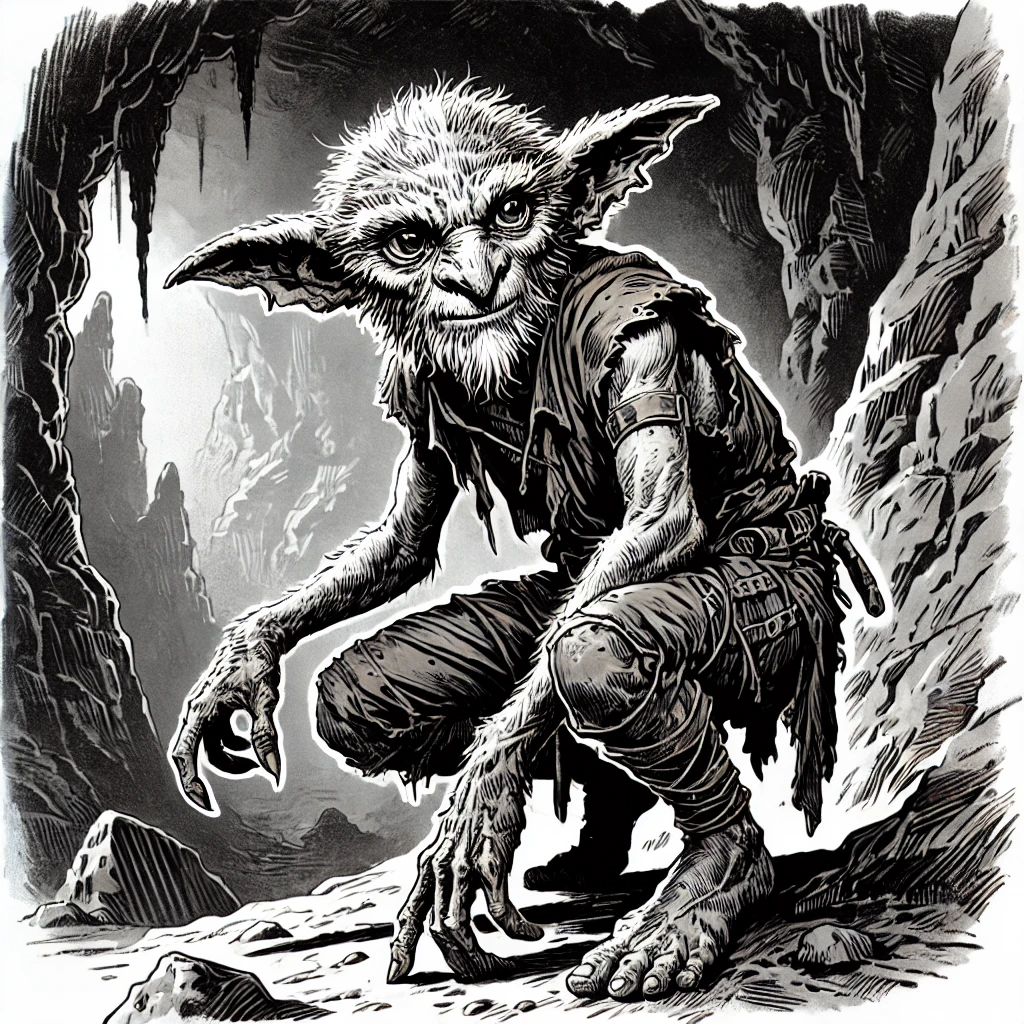
Cave goblins are among the most dangerous tribes to appear in northeast Ulvenor in recent years. It was here that they began to create extensive tribal unions, which are no longer just ordinary bands of raiders, but begin to resemble a real military force. Many of these tribes settled in abandoned dwarven mines and mountain strongholds. These dark spaces became their new home and at the same time an excellent base for further expansion. Tensions between them and the Stonecrown dwarves continue to rise, and many believe that open war is only a matter of time. Cave goblins are not as strong as dwarves, but their advantage is agility, cunning, and a complete lack of moral inhibitions. They are not afraid to use poisons, traps, ambushes or other dark methods if it gives them an advantage. Some scholars even claim that their bodies are better able to withstand the influence of dark forces and negative energy that would weaken or destroy other races. If this is true, it may mean that the time of the goblins is indeed approaching.
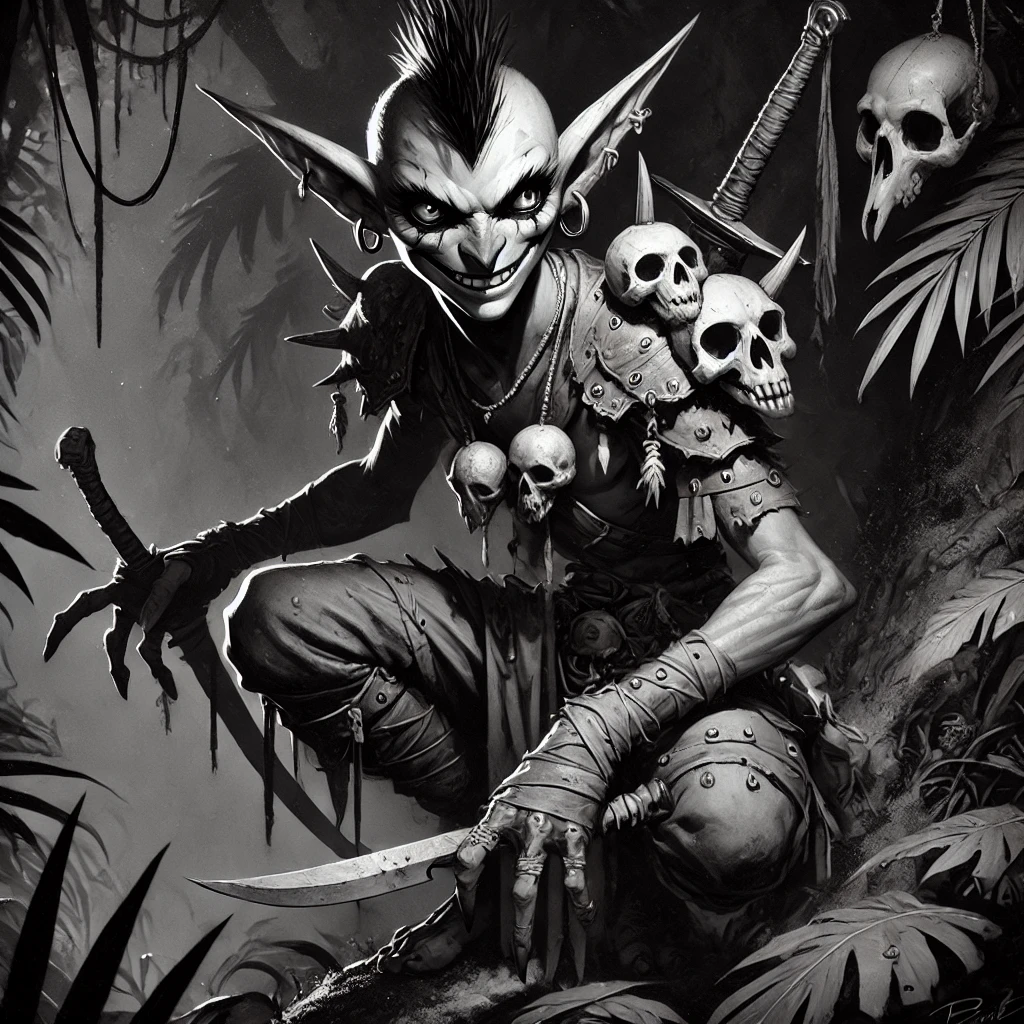
The Skull Hunters are no ordinary tribe, but rather a special community of goblins that gradually spread throughout Ulvenor. Their real motivation is gold - and they are willing to do anything to get it. Their origins date back to ancient times when the First Goblin King appeared. He tried to unite all the goblin tribes and create his own kingdom. However, his ambition ended in a disastrous defeat and his followers were driven to the northern edge of the great plains. There, their descendants learned to survive in a different way. For centuries they lived in secret groups that gradually penetrated into the surrounding countries. They founded guilds, bands of mercenaries and organizations of bounty hunters. They gradually built a reputation as dangerous professionals who can track down almost anyone. The most famous of these groups are the Morthakar - feared assassins responsible for the downfall of many clans and the deaths of several legendary warriors. Where their sign appears, blood usually follows.
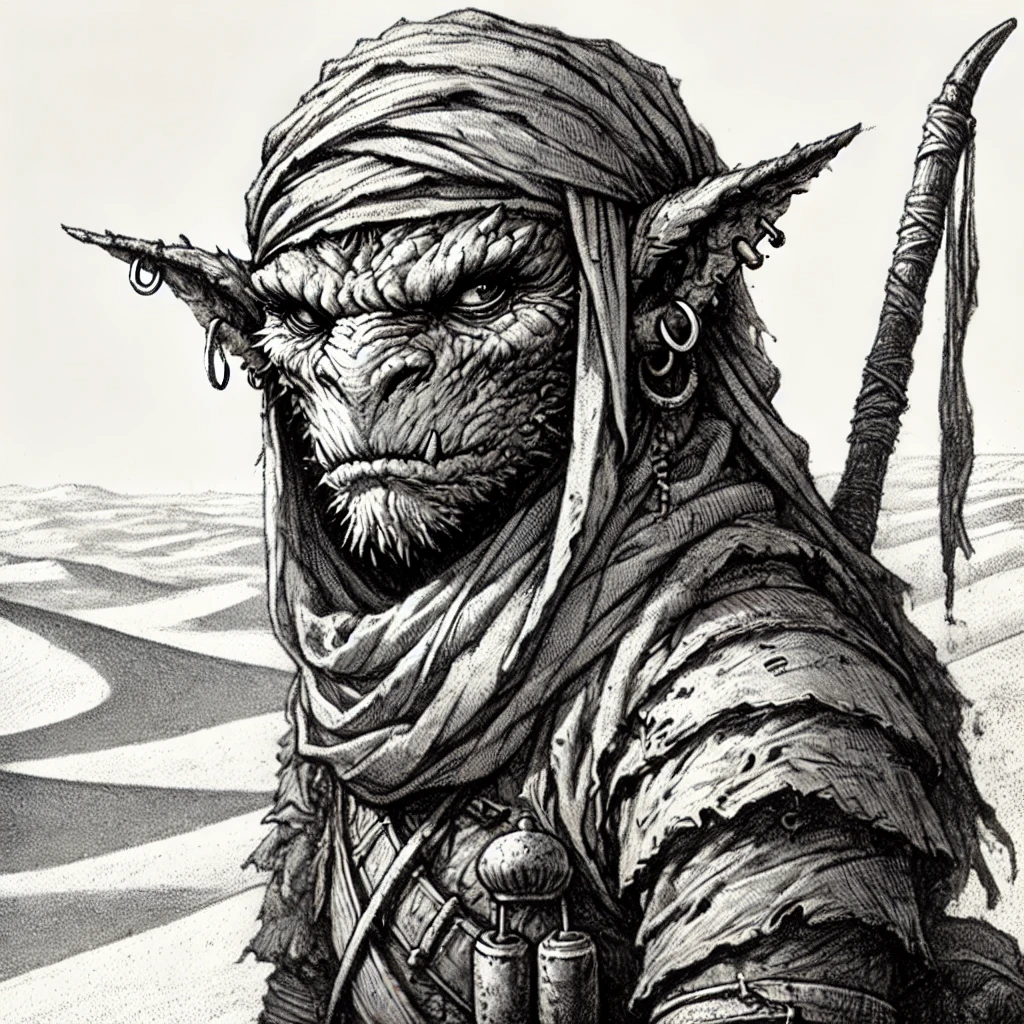
The desert goblins are among the oldest and least understood goblin tribes. Their history is shrouded in mystery and most information about them comes only from elven chronicles and old legends. Their home is the great deserts of southern Ulvenor, where they have been able to survive in an environment that would quickly destroy most other nations. It was here that the first great goblin cities were built, long before other goblin tribes had even attempted anything similar. Elven records speak of numerous raids by desert goblins on their territory. These attacks were so devastating that they contributed to the creation of the First Elven Empire to unite the elven nations against this threat. Desert goblins are perfectly adapted to the harsh environment of their homeland. Their bodies can withstand heat and lack of water. They also learned to use the local fauna – especially the desert bison, which serve as their means of transport and war animals. They are known for making simple but deadly weapons. However, their real strength is not the blades themselves, but the poisons they can prepare with almost masterful precision. And it is because of these abilities that the desert goblins have become one of the most dangerous peoples to ever pass through the burning sands of the southern deserts.