
Systems and Equipment
Weapons, armor, crafting, enchanting, potions, materials, deities, and guilds.
🐉 Summoning
📜 Summoning Rules
- Companion turn: A summoned companion is an independent combat unit controlled by its summoner. It uses its own attacks and abilities on its turn; ideally, it acts immediately after the summoner's turn.
- Ability timing: If an ability says it is used every Xth round, the first round of combat counts. The ability therefore activates in round 1 and then again after the listed interval.
- Independence: Companions are independent combat units with their own hit points, damage, defense, and abilities.
- Perma duration: If a summoning spell lists its duration as Perma, the companion remains active according to combat rules or until destroyed, unless a specific rule says otherwise. After it is destroyed, it can only be summoned again in the next combat.
- Multiple companions: A summoner can have multiple companions, but only one companion from a single spell or ability can be active at a time. The same spell cannot summon the same companion multiple times.
From Classes




Mechider

A spider-like mechanical helper built to entangle enemies and open space for follow-up attacks.
Mechider acts like a small engineering predator. It does not rely on brute force, but on speed, metal limbs, and tangling cable threads. In combat it rarely looks like the main threat until it catches an enemy's legs, weapon, or armor and breaks their rhythm. It is the ideal image of a Mechanic's first combat construct: not a perfect killer, but an irritating tool that makes every opponent slower and more vulnerable.
Mechanically, Mechider is a control companion with low durability, weaker defense, and a useful on-hit effect. Its main value is not damage, but a short defense penalty that combines very well with the summoner's next attack or the party's focus fire.
When Mechider successfully hits an enemy, it applies a short debuff that reduces the target's defense by 3 for 1 round. It is a simple but very practical ability because it sets up the target for the summoner's next attacks or for allied follow-up attacks.
🔓 Unlock
- Mechanic level 1+ Class companion
💪 Strengths
- Reduces the defense of the target it hits.
- Sets enemies up well for stronger allied attacks.
- Useful from the start of the game as simple control.
🎯 Tactical Use
Mechider works best against one important target the party wants to break through quickly. Send it at enemies with higher defense and then aim heavier attacks at the same target.
Golem

A heavy construct that blocks space, absorbs pressure, and punishes enemies that fail to break through it.
The Golem is a slow, heavy presence that turns the battlefield into a wall. It does not need speed or subtlety; it simply stands where the enemy wants to pass and makes that choice expensive. Its body feels more like moving fortification than living creature, and its value is clearest when enemies are forced to waste attacks on it.
The Golem is a defensive companion focused on soaking hits and controlling space. Its retaliation can briefly stun an enemy after a successful defense or when it takes no physical damage, making it excellent at protecting fragile allies and slowing enemy pressure.
When the Golem successfully defends, or when it takes 0 physical damage from an attack, it can punish the attacker with a stunning counter. The target is stunned for 1 round, which makes the Golem useful not only as a shield, but also as a way to stop enemy momentum.
🔓 Unlock
- Mechanic level 5+ Class companion
💪 Strengths
- Very good at holding a line.
- Can punish attacks that fail to break through it.
- Protects fragile allies by occupying enemy attention.
🎯 Tactical Use
Place the Golem where enemies need to pass or where a fragile ally needs cover. Its job is not to chase targets, but to make the enemy lose time and actions.
Firestarter

A combat machine with a burning core that turns critical hits into stacking fire damage.
Firestarter is the Mechanic's answer to enemies who think one hit is over once the blade or claw pulls away. Its unstable core burns through armor seams and keeps the pressure going after a critical strike. It feels aggressive, volatile, and dangerous even to stand near.
Firestarter is a damage-over-time companion. It has solid offensive pressure and gains most of its value when critical hits land, because its burn can stack and keep damaging the target over several rounds.
When Firestarter scores a critical hit, the target starts burning. The burn deals 3 damage per round for 3 rounds and can stack, so repeated critical hits can quickly turn into serious ongoing pressure.
🔓 Unlock
- Mechanic level 10+ Class companion
💪 Strengths
- Rewards critical hits with ongoing damage.
- Stacking burn can punish durable targets.
- Keeps pressure on enemies even after its turn ends.
🎯 Tactical Use
Use Firestarter against enemies that will survive multiple rounds. The longer the fight goes and the more critical hits land, the more valuable its burn becomes.
Dinodroid

A masterwork war machine that can protect its summoner even at the cost of its own existence.
Dinodroid is less a companion and more a walking oath in metal form. It dominates the field through size, weight, and absolute loyalty. When the summoner is about to fall, the machine can step between life and death in the most literal way possible.
Dinodroid is an elite guardian companion. Its key rule is death prevention: if the summoner would die before the companion, Dinodroid can be sacrificed so the summoner survives with the companion's remaining hit points.
If the summoner would die while Dinodroid is still alive, Dinodroid can sacrifice itself. The summoner survives and takes over the companion's remaining hit points. This makes Dinodroid one of the strongest defensive companions in the system.
🔓 Unlock
- Mechanic level 15+ Class companion
💪 Strengths
- Can prevent the summoner's death.
- Combines protection with strong battlefield presence.
- Forces enemies to deal with it before finishing the summoner.
🎯 Tactical Use
Keep Dinodroid alive when the summoner is exposed. Its greatest value appears in dangerous fights where one failed defense could otherwise end the character.
Crow

A quick flying attacker that turns critical hits into sharply increased damage.
The Crow fights through timing, altitude, and irritating precision. It does not hold a line; it dives in, strikes where the enemy is careless, and disappears before the battlefield can pin it down. Its danger is not raw strength, but the moment when a small strike lands exactly where it should.
The Crow is a light striker. Its critical hits deal triple damage, which makes it swingy but useful when the party can improve hit quality or create openings.
When the Crow scores a critical hit, its damage is multiplied by 3. The ability is simple, but it makes every critical hit from the Crow much more threatening than its size suggests.
💪 Strengths
- Very dangerous on critical hits.
- Can pressure enemies without standing in the main line.
- Fits well with tactics that improve hit quality.
🎯 Tactical Use
Use the Crow as a mobile finisher or harassment tool. It is not meant to tank; it wants openings, distracted targets, and moments where a critical hit can matter.
Badger

A stubborn ground attacker that can empower one bite for focused single-target damage.
The Badger is small enough to be underestimated and stubborn enough to make that mistake costly. It digs in, refuses to let go, and turns one target into a personal problem. Its combat fantasy is simple: once it chooses something, it keeps biting until the target regrets existing nearby.
The Badger is a single-target pressure companion. Its empowered attack adds bonus damage and then goes on cooldown, so it works best when saved for a meaningful strike rather than spent blindly.
The Badger can replace one attack with a focused bite that deals +3 bonus damage. The ability has a 5-round cooldown that starts after a successful hit, so it rewards choosing the right target and waiting for a real opening.
💪 Strengths
- Reliable pressure against one target.
- Empowered bite adds clear burst damage.
- Good for fights where one enemy must be worn down.
🎯 Tactical Use
Point the Badger at a priority enemy and keep it there. Use Targeted Bite when the hit is likely to land or when extra damage will help finish the target.
Boar

A frontal charger that periodically replaces its attack with a stunning rush.
The Boar is the straightforward answer to a complicated battlefield: lower the head, charge, and make the enemy move or fall. It is not elegant, but it is brutally readable. When the fight needs a gap opened or a target interrupted, the Boar supplies the impact.
The Boar is a control-charge companion. Every 5th round, including the first, it replaces its normal attack with a charge that can stun for 1 round.
Every 5th round, including round 1, the Boar replaces its normal attack with a rush. On success, the target is stunned for 1 round. This makes the Boar strongest at the start of combat and during longer fights where the charge comes back around.
💪 Strengths
- Can stun a target on a timed charge.
- Strong opening pressure in round 1.
- Good for breaking enemy formation.
🎯 Tactical Use
Use the Boar to disrupt a dangerous enemy early. In longer combats, plan around the next charge window and aim it at a target whose lost turn matters.
Wolf

A fast predator that grows stronger when fighting alongside other friendly wolves.
The Wolf is loyalty turned into teeth. Alone it is dangerous; in a pack it becomes a rhythm of pressure, flanking, and shared aggression. It works best when the battlefield gives it allies to coordinate with instead of leaving it isolated.
The Wolf is a pack-damage companion. It gains bonus damage for each friendly wolf, making multiple wolves or wolf-themed support especially valuable.
The Wolf gains +2 bonus damage for each friendly wolf. The ability is passive and rewards positioning, multiple wolf allies, and fights where the pack can stay active together.
💪 Strengths
- Scales with friendly wolves.
- Good mobility and flank pressure.
- Simple passive value with no cooldown management.
🎯 Tactical Use
Keep the Wolf near other wolves or wolf-like allies if available. It is best when the party can create a small pack instead of treating it as a lone attacker.
Bear

A durable front-line animal whose damage rises as it loses hit points.
The Bear starts as a wall and becomes a warning. The more the enemy hurts it, the more dangerous it gets. It is calm until forced into violence, and once that happens, its role is to turn punishment into pressure.
The Bear is a berserker tank. It gains +1 bonus damage for every 5 missing hit points, so damaging it without finishing it can make it increasingly dangerous.
The Bear gains +1 bonus damage for every 5 hit points it is missing. This makes it more dangerous the longer it survives under pressure.
💪 Strengths
- High front-line presence.
- Damage increases as it is wounded.
- Punishes enemies that cannot finish it quickly.
🎯 Tactical Use
Let the Bear occupy hard fights where it can survive several rounds. It is especially useful when enemies will hit it but not kill it immediately.
Phoenix

A radiant mythical attacker that can return after its first death.
The Phoenix carries the fantasy of fire that refuses to end. It threatens enemies from above, burns bright in the middle of combat, and when destroyed for the first time, it rises again instead of leaving the summoner without support.
The Phoenix is a resilient magical attacker. Its key value is self-resurrection once per combat, making it hard to remove permanently with a single focused burst.
The first time the Phoenix dies in combat, it revives once. This lets it absorb dangerous pressure and still return to the fight.
🔓 Unlock
- Fire Companion level 1+ Summoning spell
💪 Strengths
- Revives once per combat.
- Maintains pressure even after being destroyed.
- Useful in fights with heavy burst damage.
🎯 Tactical Use
Do not be afraid to put the Phoenix into risky positions when its resurrection is still available. After it has revived, treat it more carefully.
Toad

A swamp creature that grows more dangerous with every successful hit.
The Toad looks harmless only to those who have never watched a quiet threat survive long enough. It settles into the fight, hits when it can, and slowly becomes harder to ignore. Its strength is not spectacle, but accumulation.
The Toad is a snowball-damage companion. Each successful hit gives it a permanent damage bonus, so its value rises in long combats.
Whenever the Toad successfully hits, it gains +1 permanent bonus damage. The bonus stacks over the fight and makes the Toad increasingly dangerous if enemies ignore it.
🔓 Unlock
- Summon Toad level 5+ Summoning spell
💪 Strengths
- Gains permanent damage after successful hits.
- Excellent in longer combats.
- Forces enemies to decide whether to remove it early.
🎯 Tactical Use
The Toad wants time. Keep it attacking targets it can realistically hit, and let the damage bonus build before turning it into a major threat.
Skeleton

A fragile undead servant that can create more skeletons as other units die.
The Skeleton is a simple, cold, and disturbingly practical answer from the dark to the question of what to do with the dead. It is neither elegant nor strong in any conventional sense, but its presence changes the nature of a battle: every fallen body can become the start of another problem. It looks like the bleached remains of a former life, animated by an alien will, and that is precisely why it feels so unpleasant on the battlefield. It is not here to survive forever; it is here to multiply wherever others fall.
The Skeleton is a necromantic swarm companion. When another unit dies, it can summon an additional skeleton that belongs to the same owner, increasing pressure through numbers.
When any other unit dies, the Skeleton can summon an additional skeleton. The new skeleton belongs to the same owner, turning deaths on the battlefield into more undead pressure.
🔓 Unlock
- Summon Skeleton level 10+ Summoning spell
💪 Strengths
- Can create additional skeletons.
- Gets stronger in chaotic fights with many deaths.
- Adds pressure through numbers rather than durability.
🎯 Tactical Use
Use the Skeleton in fights where units are likely to die. It is fragile, but if it survives long enough for its ability to trigger, it can multiply the problem.
Lava Golem

A walking hazard zone that damages the battlefield around it every round.
The Lava Golem is a glowing mass of stone, metal, and liquid fire that leaves cracked ground and choking heat in its wake. It does not feel like a creature someone summoned, but rather like a piece of a volcano that has decided to walk. Its greatest strength is not only in its blows, but in the way it turns the surrounding area into hostile ground. The enemy does not fight only the golem itself; it fights the floor, the air, and the heat that begins to steal the very space it has left to breathe.
The Lava Golem is an area-pressure companion. Each round it deals area damage based on the difference from the maximum value of an 18-point 3d6 check.
Every round, the Lava Golem creates area pressure. Its damage is calculated as 18 minus the current total of the 3d6 check. The lower the roll, the more dangerous the effect becomes.
🔓 Unlock
- Lava Companion level 10+ Summoning spell
💪 Strengths
- Creates area damage every round.
- Controls space by punishing nearby enemies.
- Strong in fights where enemies must cluster or hold position.
🎯 Tactical Use
Put the Lava Golem where enemies want to stand. It is strongest when it denies space, blocks routes, or forces clustered enemies to move.
Red Dragon

A destructive dragon whose breath periodically hits every enemy.
The Red Dragon is the classic answer to grouped enemies: fire, wings, and no interest in subtlety. It dominates through the threat of a breath attack that can change the shape of the whole battlefield.
The Red Dragon is a periodic area-damage companion. Every 5th round, including the first, a successful attack hits all enemies.
Every 5th round, including round 1, the Red Dragon's successful attack hits all enemies. This makes its opening turn and each later breath window extremely important.
🔓 Unlock
- Summon Dragon level 15+ Summoning spell
💪 Strengths
- Can hit all enemies on a successful breath attack.
- Very strong against grouped opponents.
- Creates major pressure in round 1.
🎯 Tactical Use
Use the Red Dragon when the enemy side has several targets. Plan around its breath rounds and try to keep it active until the next area attack.
Green Dragon

An acid dragon that combines periodic area attacks with ongoing damage until resistance succeeds.
The Green Dragon does not just strike; it leaves the battlefield worse than it found it. Its acid clings, burns, and keeps working after the initial attack. Enemies that survive the hit still have to deal with the aftermath.
The Green Dragon is a periodic area-damage companion with damage over time. Every 5th round, including the first, a successful attack hits all enemies and applies acid damage until resistance succeeds.
Every 5th round, including round 1, the Green Dragon's successful attack hits all enemies. Affected targets also take 4 damage over time each round until they succeed on resistance DC 11.
🔓 Unlock
- Summon Dragon level 15+ Summoning spell
💪 Strengths
- Hits all enemies on its breath window.
- Adds ongoing acid damage.
- Forces repeated resistance pressure.
🎯 Tactical Use
Use the Green Dragon against groups that cannot end the fight quickly. Its value rises when the damage over time has several rounds to work.
Gold Dragon

A legendary dragon that combines area damage, ongoing burn, and defense reduction.
The Gold Dragon is a decisive battlefield presence. It does not merely damage enemies; it softens them, marks them, and leaves them easier for the whole party to finish. When it takes the field, the fight should feel like it has reached the top tier of summoning.
The Gold Dragon is an elite area-control companion. On a successful attack with cooldown, it can hit all enemies, apply damage over time, and reduce their defense until resistance succeeds.
On a successful attack, the Gold Dragon hits all enemies, applies 6 damage over time each round, and reduces their defense by 3 until they succeed on resistance DC 14. The ability has a 4-round cooldown.
🔓 Unlock
- Summon Dragon level 15+ Summoning spell
💪 Strengths
- Combines area damage with a defense penalty.
- Applies strong ongoing damage.
- Can set up the whole party for follow-up attacks.
🎯 Tactical Use
Save the Gold Dragon's pressure for fights with multiple important enemies. Its defense penalty is a party-wide opportunity, so follow it with heavy attacks while enemies are weakened.
🔨 Crafting and Upgrades
When Finding Better Gear Is Not Enough
In the world of Howl of Eternity, strong weapons, sturdy armor, and rare artifacts are not only rewards from chests or shops. Many of them are made by those who understand craft, materials, and the secrets of improvement. Crafting is therefore not just a side activity, but a full path for strengthening a character and shaping their gear exactly around what they need.
Crafting in Howl of Eternity gives players a way to actively create their own gear instead of relying only on loot and merchants. At the same time, it is not an automatic process. Crafting and enchanting require skills, materials, knowledge, and a willingness to risk failure.
Basic Crafting Rules
Every item that can be created, enchanted, or upgraded in the world follows several basic rules. The character must know what they want to create, must have the required materials, and above all must have enough ability to handle the process. The result therefore never depends only on the idea, but also on the character's preparation.
This system gives crafting weight. Players can gain stronger gear through their own path, but every upgrade has a cost, and not every attempt ends in success.
Crafting and Enchanting Roll Results
When crafting and enchanting, it matters not only whether the character succeeds or fails. The total result also determines the quality of the work itself. One attempt may end in simple failure, while another may create an item of higher quality than the character originally intended.
Crafting in Howl of Eternity is therefore not purely binary. It is not just a yes-or-no question. Over time, a skilled craftsperson can reach a point where they create not only functional items, but truly exceptional pieces.
Item Quality
Every crafted or found item can have its own quality. Quality determines how well a weapon, armor, or shield is made, and also affects how easy it will be to upgrade that item further. Howl of Eternity distinguishes three basic quality tiers: common, improved, and masterwork.
Item quality is therefore not just cosmetic. It has a direct impact on further crafting and can decide whether it is better to upgrade an old item or craft a new base from the start.
Item Upgrades
Weapons, armor, and shields in Howl of Eternity can not only be crafted, but also gradually raised to higher levels. These upgrades represent technical, material, or magical improvements to the item. However, this is not a jump-based system: an item must be improved step by step.
upgrade roll = base crafting difficulty + target level - current level - quality bonus
This system supports long-term gear building. Items that travel with a character for a long time can gain their own history and become a truly important part of that character's identity.
Example
13 + 3 − 2 = 14
Enchanting
Alongside purely physical upgrades, there is also the path of enchanting. It focuses on magically strengthening an item, adding special properties, or changing how it behaves. Enchanting is usually more demanding in terms of knowledge and often more dangerous, because it works with forces that are not always fully stable.
Enchanting is ideal for characters who want to create unique gear or push ordinary items beyond the limits of common craft. At the same time, it requires more preparation and more careful planning.
Recipes, Scrolls, and Trial and Error
Not every crafting method is commonly known in the world. Some recipes are part of a craftsperson's basic knowledge, while others are hidden in forgotten libraries, old scrolls, or guild secrets. Some can be discovered only through experimentation.
This gives crafting a strong story dimension. Finding a recipe can be its own reward for exploration, a completed quest, or a long journey. Crafting is therefore not only an economic mechanic, but also part of the adventure.
Risk, Planning, and Choosing the Right Moment
Crafting and upgrading are not activities to be done without thought. Every attempt costs something, and the player should always consider whether they have enough materials, whether this is the right time to risk them, and whether the character truly has enough experience to take on such a project.
Sometimes it is better to wait, obtain a higher-quality base, or find a better recipe. At other times, the risk pays off because success can significantly help the party. That is what makes crafting interesting: it is not only a technical process, but also a decision.
Note for Players
If you want to build a character around crafting, it pays to think ahead. Track what materials the party finds, which items you use most often, and whether it is more worthwhile to invest in a new piece of gear or keep strengthening the one you already have. Crafting rewards patience, planning, and good risk judgment.
Note for Game Masters
Crafting and upgrades can greatly enrich both the world and the campaign itself when they are well grounded in the setting. Instead of being only a technical table between adventures, they can become part of the story: searching for rare ores, acquiring recipes, negotiating with master craftspeople, or discovering lost methods of enchanting.
✨ Enchanting
A character can enrich their gear with enchantments that improve its properties or add unique effects. One item can carry multiple enchantments, but only different enchantments, never the same effect more than once. Each enchantment is tied to a specific equipment type and requires a precise pair of materials.
Enchanting roll: Basic: 10+, Improved: 20+, Masterwork: 30+. On failure, the enchantment fails and the used materials are lost.
The strength of an enchantment depends on the quality of its creation. Basic quality uses the values in the base field, improved quality uses the better field, and masterwork quality uses the master field.
Sharpness
Increases the weapon's direct damage and is one of the most reliable offensive enchantments, because it works on every hit without any further conditions.
- Damage bonus 3
- Damage bonus 5
- Damage bonus 8
Flames
On a successful hit, ignites the target and applies a fire debuff. The effect does not stack, so the target can only have one instance of this enchantment at a time.
- Duration 3 rounds
- Damage/round 2
- Duration 3 rounds
- Damage/round 4
- Duration 3 rounds
- Damage/round 6
Poison Breath
On hit, applies a poison debuff that can stack. This makes the enchantment more dangerous in longer combats and during rapid chains of hits.
- Duration 5 rounds
- Damage/round 1
- stackable
- Duration 5 rounds
- Damage/round 2
- stackable
- Duration 5 rounds
- Damage/round 3
- stackable
Plate
Strengthens the protective value of the gear and increases the wearer's total defense rating. It is one of the most straightforward defensive enchantments.
- AC bonus 2
- AC bonus 3
- AC bonus 4

Cleansing Aura
If the wearer suffers a critical hit, the effect converts the critical damage into normal damage and also removes all active negative debuffs from the wearer. This enchantment is focused on surviving crisis moments.
- critical hit -> normal hit
- cleanses negative effects
- critical hit -> normal hit
- cleanses negative effects
- critical hit -> normal hit
- cleanses negative effects
Drain
On a successful hit, returns part of the damage dealt to the wearer as healing. It is strongest on weapons that attack often or hit hard.
- Healing 25% of damage
- Healing 50% of damage
- Healing 75% of damage
Immobilization
Each successful hit adds a token. After the required number of tokens is reached, another hit can stun the target and all tokens are then consumed.
- Tokens 5
- Stun 2 rounds
- Tokens 4
- Stun 2 rounds
- Tokens 3
- Stun 2 rounds
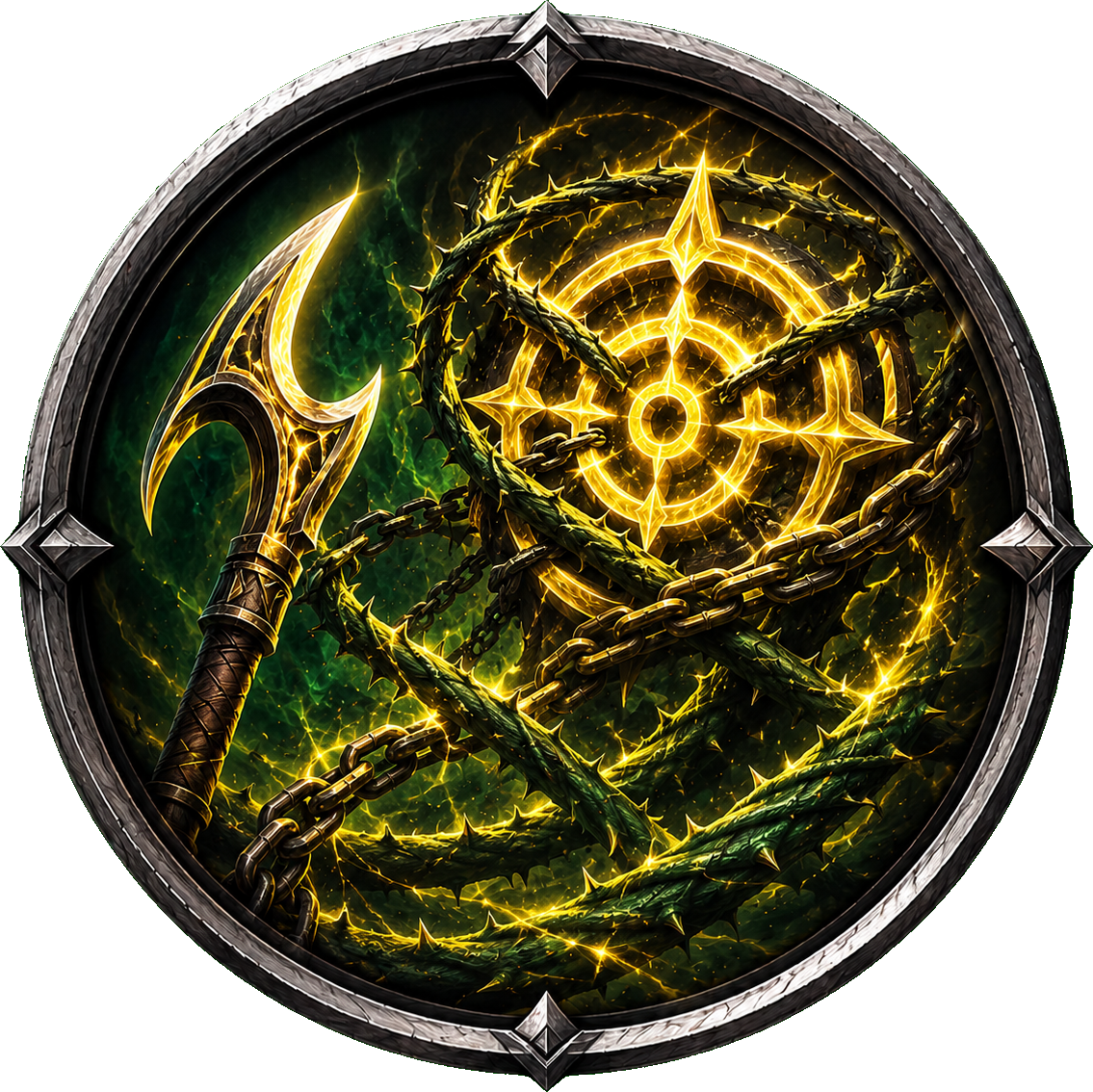
Dark Binding
Successful hits build tokens, and once they are filled, the next hit roots the target. The root duration increases with enchantment quality.
- Tokens 3
- Root 2 rounds
- Tokens 3
- Root 3 rounds
- Tokens 3
- Root 4 rounds
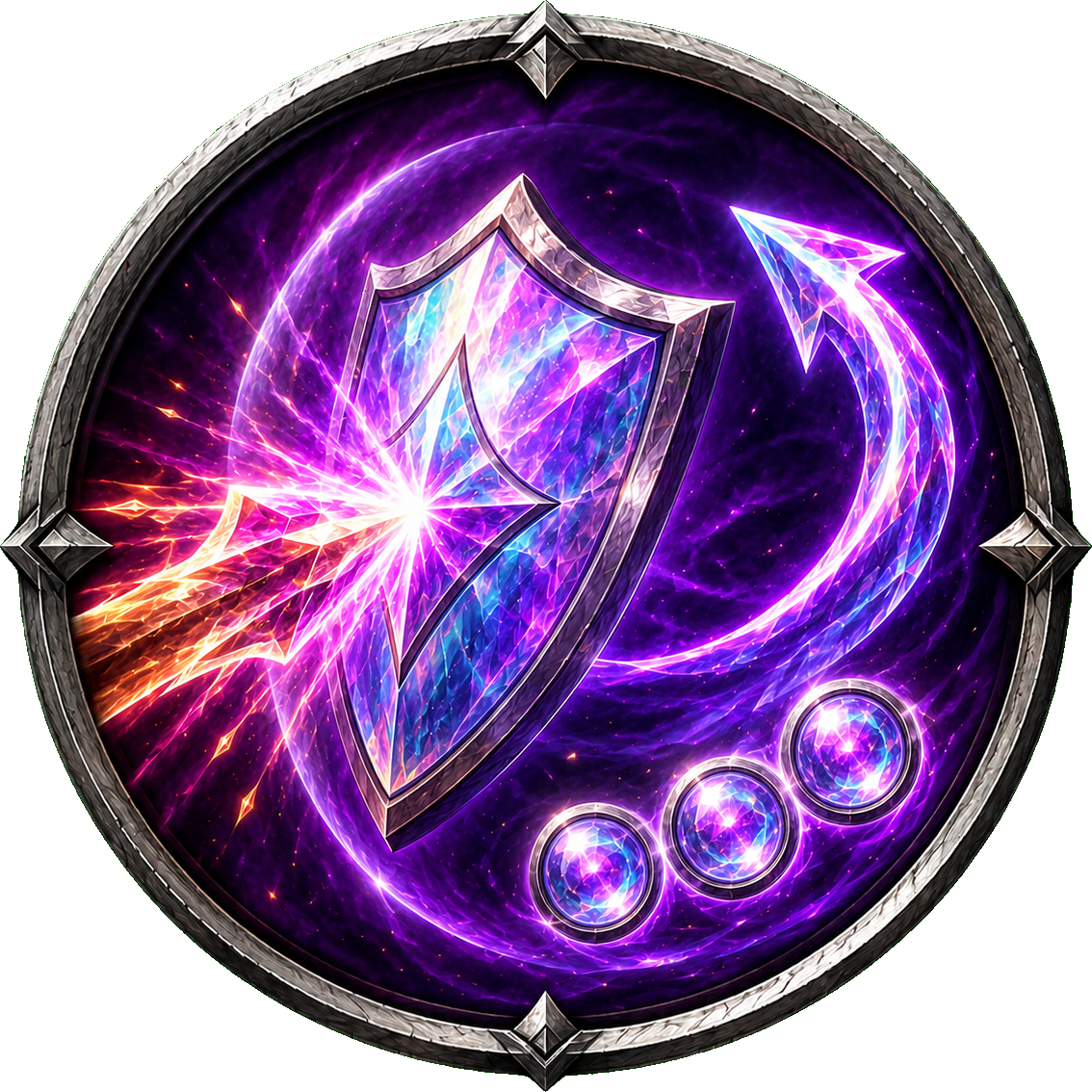
Reversal
A token is stored whenever the wearer fails a defense. Once the limit is reached, the wearer can fully block any attack and the tokens are then reset.
- Tokens 5
- full block
- Tokens 4
- full block
- Tokens 3
- full block
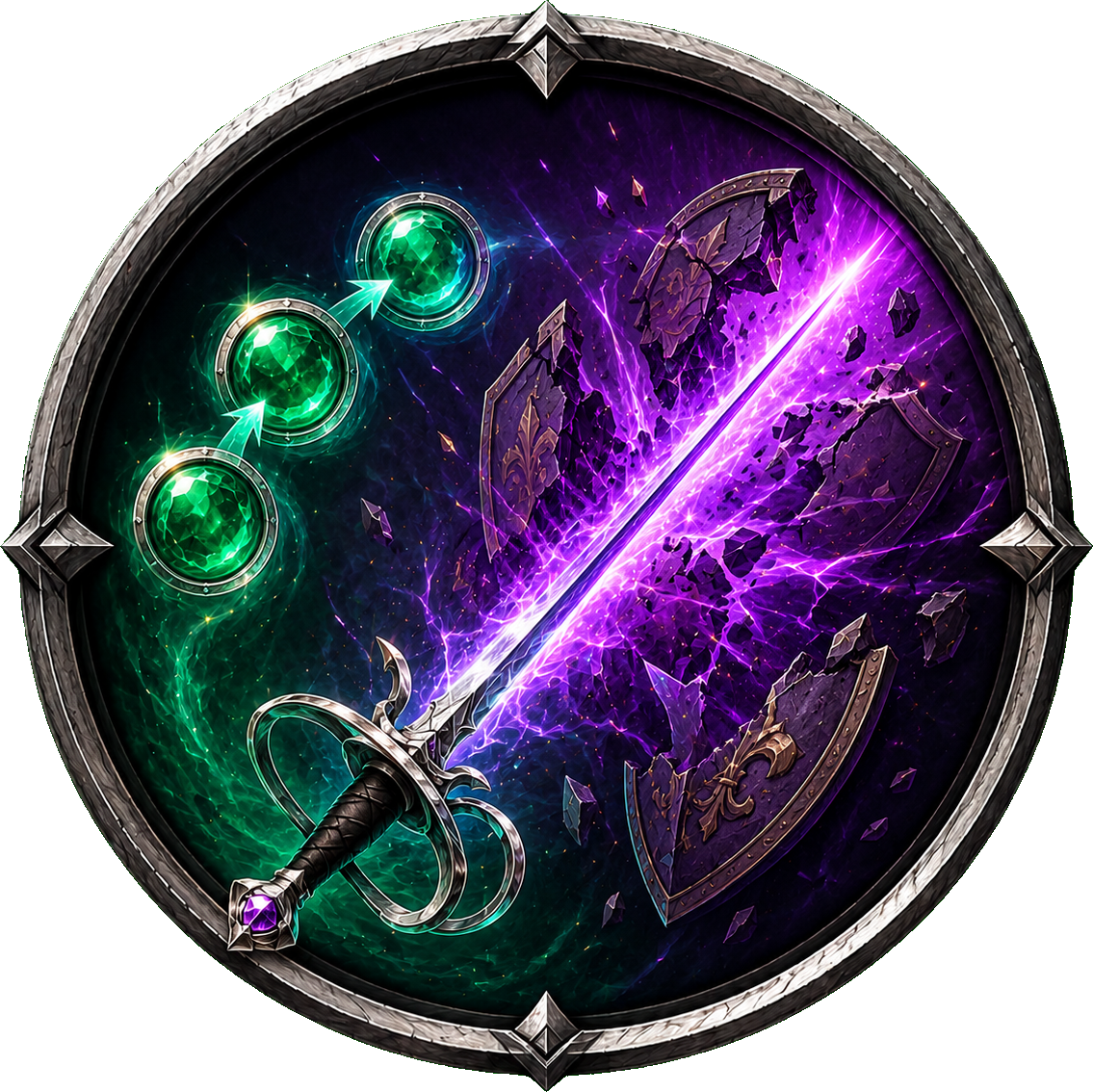
Waiting Strike
Each missed hit adds a token. Once the limit is reached, the wearer can make an attack the opponent cannot defend against, and the tokens are consumed.
- Tokens 5
- unblockable attack
- Tokens 4
- unblockable attack
- Tokens 3
- unblockable attack

Magic Resistance
Reduces damage received from spells and other purely magical sources. This enchantment is especially useful against mages and bosses with high magic burst.
- Magic damage reduction 20%
- Magic damage reduction 30%
- Magic damage reduction 40%
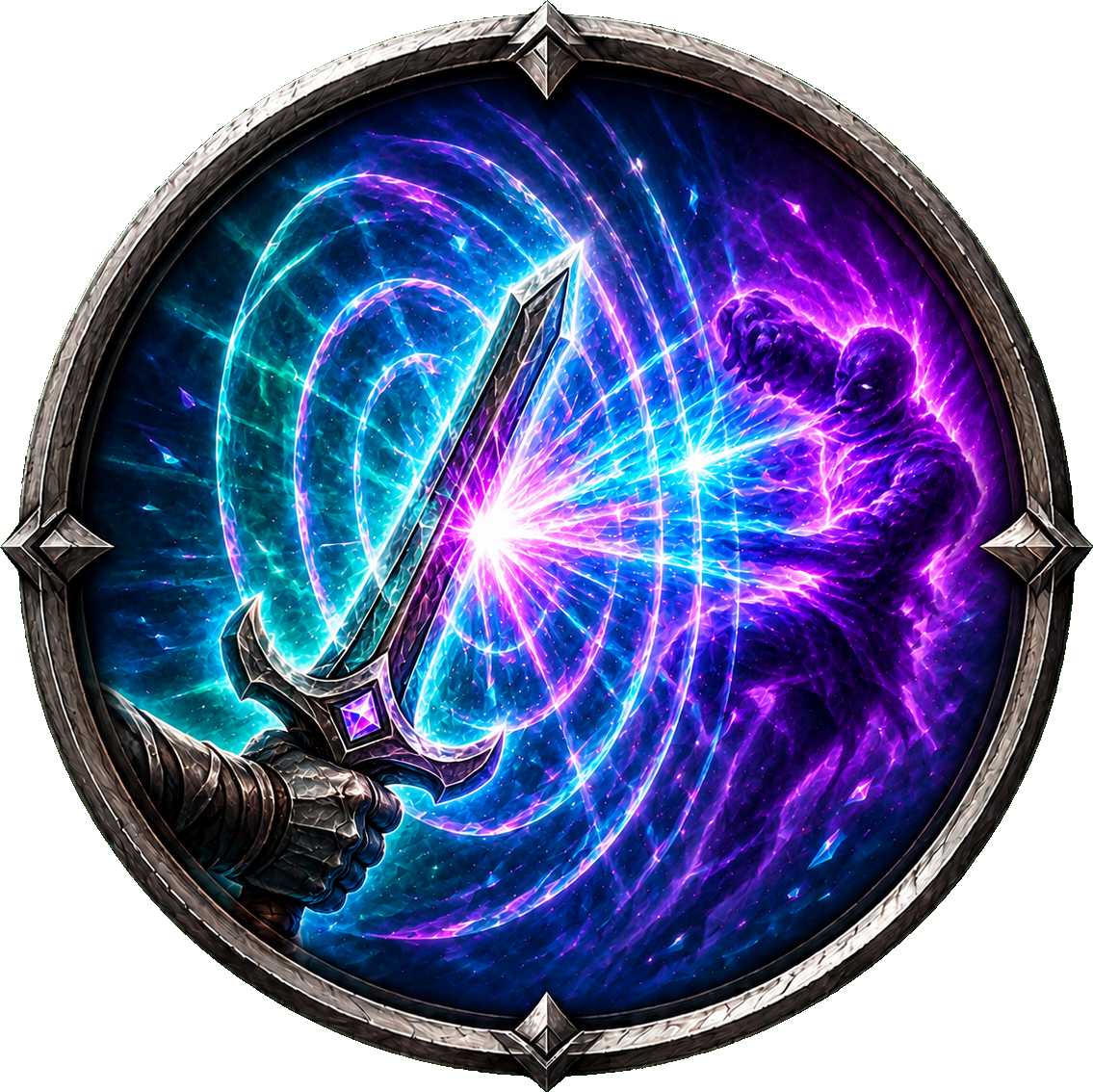
Echo of Strike
If the wearer successfully defends with Defensive Maneuvers, part of the potential damage is returned to the attacker. This is a strong enchantment for defensively tuned melee fighters.
- Returned damage 25%
- Returned damage 35%
- Returned damage 50%
Silence
A successful hit worsens the target's focus and reduces their Concentration rolls. It is very useful against casters and opponents dependent on channeled effects.
- Concentration penalty -4
- Concentration penalty -6
- Concentration penalty -8
Sixth Sense
Improves awareness of the surroundings and the ability to move unnoticed. It suits scouts, hunters, and characters who often work from ambush.
- Skill bonus 2
- Skill bonus 3
- Skill bonus 4

Eternal Breath
Strengthens the wearer's endurance and combat training, helping them withstand the pressure of battle and remain active longer.
- Skill bonus 3
- Skill bonus 6
- Skill bonus 9

Quick Fingers
Successful hits build tokens, and once they are filled, the wearer can immediately fire after reloading without waiting until the next turn.
- Tokens 5
- instant shot after reloading
- Tokens 4
- instant shot after reloading
- Tokens 3
- instant shot after reloading

Fortune
Reduces the roll needed for a critical success, so the weapon scores critical hits more often. This enchantment is ideal for builds based on critical hits.
- Critical hit threshold reduction 2
- Critical hit threshold reduction 3
- Critical hit threshold reduction 5

Regeneration
Gradually restores the wearer's HP each round. It is a very strong enchantment for longer combats and characters who can survive a long time in the front line.
- Healing/round 3
- Healing/round 5
- Healing/round 8
Empowerment
Increases the wearer's Strength and supports physical dominance in combat and strength-based actions outside combat.
- Stat bonus 1
- Stat bonus 2
- Stat bonus 3

Lightness
Increases the wearer's Dexterity and improves overall mobility, reactions, and precision of finer movement.
- Stat bonus 1
- Stat bonus 2
- Stat bonus 3
Weakening
Creates an aura around the wearer that reduces enemies' maximum HP. It is a strong pressure effect against durable opponents and groups.
- Enemy max HP penalty 20
- Enemy max HP penalty 40
- Enemy max HP penalty 60
Slowing
The aura reduces the defense of nearby enemies and makes them more vulnerable to attacks from the whole party.
- Enemy defense penalty 2
- Enemy defense penalty 3
- Enemy defense penalty 4

Confusion
Nearby enemies under the aura aim worse and their attacks become less reliable. Good for defensive builds and support for the entire front line.
- Enemy attack penalty 2
- Enemy attack penalty 3
- Enemy attack penalty 4

Frost Aura
The aura dampens the power of nearby enemy spells and reduces their magic damage. It is extremely valuable against groups of mages or bosses with heavy magical pressure.
- Enemy spell damage penalty 15%
- Enemy spell damage penalty 30%
- Enemy spell damage penalty 45%
Icy Touch
On hit, applies a debuff to the enemy that reduces their combat rolls. It suits control builds and weakening powerful targets.
- Combat roll penalty 2
- Combat roll penalty 3
- Combat roll penalty 4
🧪 Potions
A character can craft potions if they have the required materials and succeed on a Crafting skill roll. Each potion has a fixed effect and cannot be upgraded to improved or masterwork quality like other items.
In combat: In combat, using a potion is an action. The character cannot attack, cast spells, or perform other actions on that turn. The effect begins immediately and mechanically applies from the opponent's next turn.
Outside combat: Outside combat, a potion can be drunk at any time if the situation allows it. Its effect lasts until the transition to a new map section or until combat begins, unless stated otherwise.
Bottle: After a potion is used, an empty bottle remains and can be reused for later crafting.
Recipes: Recipes are fixed. Any change to a recipe can lead to a different or unexpected result.
Variants: For variant potions, only the final ingredient listed in the variants changes, in the same order as the variant names.
Basic Potions roll 10+
Stat Potion
Adds +2 to the corresponding stat based on the chosen variant.
Stat Skill Potion
Adds +3 to rolls for skills of the chosen stat type.
Weak Regeneration Potion
Heals 5 HP each round.
Weak Healing Potion
Immediately restores 20 HP.
Speed Potion
Allows the character to attack twice in one round.
Fire Resistance Potion
Reduces fire element damage by 50%.
Protection Potion
Increases natural defense rating by +2.
Weak Combat Potion
Adds +2 to attack or defense based on the chosen variant.
Basic Magic Protection Potion
Reduces magic damage by 25%.
Weak Magic Enhancement Potion
Increases magic damage from cast spells by 15%.
Stronger Fire Potion
Increases magic damage of the fire element by 30%.
Antidote
Reduces poison effects by 75%.
Advanced Potions roll 18+
Regeneration Potion
Heals 12 HP each round.
Healing Potion
Immediately restores 50 HP.
Darkness Resistance Potion
Reduces darkness element damage by 50%.
Natural Protection Potion
Increases natural defense rating by +4.
Stronger Combat Potion
Adds +4 to attack or defense based on the chosen variant.
Faster Casting Potion
Spells take 1 fewer round to cast, to a minimum of 1 round.
Increased Concentration Potion
Adds +8 to Concentration rolls.
Precision Potion
Adds +5 to ranged weapon attack rolls.
Defensive Moves Potion
Adds +6 to defense.
Alertness Potion
Adds +5 to Perception rolls.
Shadow Step Potion
Adds +5 to Stealth rolls.
Harder Lightning Potion
Increases magic damage of the lightning element by 50%.
Master Potions roll 24+
Improved Stat Potion
Adds +5 to the corresponding stat based on the chosen variant.
Exceptional Stat Skill Potion
Adds +7 to rolls for skills of the chosen stat type.
Stronger Regeneration Potion
Heals 25 HP each round.
Stronger Healing Potion
Immediately restores 100 HP.
Wooden Skin Potion
Increases natural defense rating by +6.
Improved Combat Potion
Adds +6 to attack or defense based on the chosen variant.
Stone Will Potion
Negative effects from new debuffs last 2 fewer rounds.
Increased Magic Protection Potion
Reduces magic damage by 50%.
Strong Magic Enhancement Potion
Increases magic damage from cast spells by 40%.
Dark Lords' Potion
Increases magic damage of the darkness element by 75%.
Poison Sting Potion
This is not drunk. Each successful hit applies a stackable debuff that causes the loss of 3 HP per round for 5 rounds. The target can remove the effect with a Resistance roll.
🌿 Resources and Ingredients
Ingredients are the basic building blocks of crafting, alchemy, and enchanting. They can be gained by exploring the world, mining, or trade. Some require specific skills such as Ore and Gem Processing, Alchemy, or Crafting.
📦 Gems and Ores
Gems and metals are valuable materials used mainly for jewelry, weapons, armor, and magical artifacts. Some also serve in enchanting or as alchemical catalysts. Mining and processing them requires the proper skills.
Skill: Ore and Gem Processing · Locations: Rock cavities, Mountains, Mines, Deep mines, Sea, Volcanic regions

Amethyst Uncommon
A violet variety of quartz valued for both beauty and mystical properties. It is often used in protective rituals, amulets, and item enchantments.

Onyx Uncommon
A dark stone with a deep sheen, associated with protection and hidden forces. It is favored by those who work with shadows, secrets, or defensive magic.

Topaz Rare
A clear gemstone found in several colors, symbolizing judgment, precision, and quick decisions. It is used in jewelry, artifacts, and finer enchantments.

Citrine Common
A golden-yellow quartz linked with warmth, energy, and inner strength. It often appears in protective items and vitality-focused enchantments.

Garnet Common
A red to brown gemstone symbolizing strength, endurance, and life energy. It suits combat-focused jewelry and artifacts particularly well.

Amber Uncommon
A golden resin stone valued for its appearance and strong tie to fire. It is often used in fire enchantments and magical items.

Iron Ore Common
Common iron ore that forms the basis of most metal weapons, armor, and other combat gear. No capable smith can work for long without it.

Copper Common
A reddish metal used as a basic material for jewelry, simpler artifacts, and some crafted components. It is more accessible than precious metals, but still very useful.

Spinel Uncommon
A gemstone of many colors, often mistaken for ruby or sapphire. It is valued for its versatility and frequent use in jewelry and enchantments.

Malachite Uncommon
A green stone with striking banded patterns, associated with change, growth, and renewal. It is often used in healing and support artifacts.

Diamond Legendary
The hardest natural stone, a symbol of purity, strength, and prestige. It is used for the rarest jewelry, powerful artifacts, and high-grade enchantments.

Ruby Rare
A bright red corundum gemstone associated with passion, strength, and destructive energy. It is popular in offensive and fire-based magical items.

Sapphire Rare
A blue corundum gemstone traditionally linked with wisdom, calm, and inner balance. It is often used in magical and mental protection items.

Emerald Rare
A green beryl valued for depth, beauty, and the symbolism of prosperity. In magic, it is tied to renewal, nature, and life force.

Chrysoprase Uncommon
An apple-green chalcedony valued for its vivid shade and gentle energy. It suits support and illusion enchantments especially well.

Gold Rare
A rare metal with a warm shine, valued for beauty, worth, and its ability to conduct magic. It is popular for luxury jewelry, relics, and precious artifacts.

Morganite Rare
A pink beryl associated with love, gentleness, and emotional harmony. It is used mainly in jewelry and items that support emotions and relationships.

Fluorite Uncommon
A colorful gemstone known for fluorescence and a calm, balanced energy. It often appears in items that support mental harmony and stability.

Pearl Rare
An organic gemstone formed inside shells, long treated as a symbol of purity, elegance, and subtle beauty. In magic, it is linked with cleansing and light.

Opal Rare
A gemstone with iridescent colors, associated with creativity, changeability, and inspiration. It is favored by artists, mages, and alchemists.

Tourmaline Rare
A multicolored gemstone known for electrical conductivity and strong energetic resonance. It suits items that work with lightning and forceful currents of magic.

Aquamarine Rare
A pale blue beryl inspired by the color of calm seas, associated with restraint, calm, and clarity of mind. It appears often in protective and healing items.

Labradorite Rare
A stone with an iridescent spectrum of colors, prized for its mysterious and mystical glow. It is used mainly in magical and illusion artifacts.

Zircon Uncommon
A clear gemstone with a fiery shine, often mistaken for diamond. It has its own value and is used in precise, elegant enchantments.

Obsidian Uncommon
Natural volcanic glass with a dark sheen, symbolizing protection, insight, and hidden strength. It is often used in defensive, dark, and ritual magic.
📦 Plants
Plants are key materials for alchemy, potion making, and poisons. Each region offers unique species with specific effects and uses.
Skill: Herb Gathering · Locations: Meadows, Cliffs, Forests, Swamps, Waterways, Volcanic regions

Wolf Poppy Common
A dark red flower used to dull pain and calm the mind. It often forms the base of healing potions and mixtures focused on regeneration or relief from injury.

Sun Goldleaf Common
A golden-yellow flower that restores energy and strengthens physical power. Warriors and adventurers value it before demanding fights.

Night Starwort Uncommon
A bright white flower that appears only at night and glows softly. It supports darkvision and is used in potions that improve perception.

Golden Bell Common
A small plant with yellow bell-like flowers. It helps accelerate natural bodily regeneration and is common in healing decoctions.

Iron Grass Uncommon
A tough grass with metallic fibers that strengthens endurance and resistance. It is often used in mixtures that harden the body or improve staying power.

Whisperleaf Uncommon
A quiet herb whose leaves seem to rustle even without wind. It is used in mixtures tied to stealth, subtle perception, and mental focus.

Angel Thorn Rare
A rare thorny plant with pale blossoms, associated with protection and cleansing. It appears in powerful healing and purifying mixtures.

Ice Rose Uncommon
A cold-resistant flower with pale blue petals. It is used in mixtures tied to frost, calm, and slowing hostile forces.

Dark Ivy Rare
A creeping plant that grows in dim places and absorbs surrounding warmth. It is used in dark alchemy, bindings, and weakening effects.

Silver Vine Uncommon
A pale climbing plant with silvery fibers. It is valued in flexible binding, protection, and mobility-focused mixtures.

Silver Fern Common
A fine fern with a subtle metallic shine. It is a common support ingredient for protective and cleansing preparations.

Crystal Bramble Rare
A rare bramble whose thorns crystallize at the tips. It is used in sharp, precise, and magically conductive mixtures.

Black Tulip Rare
A rare dark flower associated with secrecy, poison, and deep emotions. Alchemists use it in strong debuffs and dangerous extracts.

Nightshade Rare
A poisonous plant used with great care in both poisons and counteragents. Its effect depends heavily on processing and combination with other ingredients.

Green Tongue Uncommon
An uncommon plant with long tongue-shaped leaves. It is used in alchemy tied to speech, toxins, and subtle bodily influence.

Light Tear Rare
A rare bright plant whose drops resemble clear tears. It is valued for healing, cleansing, and light-aspected potions.

Morning Gossamer Uncommon
A delicate plant covered with fine web-like fibers at dawn. It is used in subtle, binding, and perception-focused mixtures.

Blue Drop Common
A small blue plant named for its drop-shaped blossoms. It is a common ingredient in calming, cooling, and balancing preparations.

Lake Lotus Rare
A rare water plant associated with stillness, clarity, and renewal. It is used in strong healing and mental balance potions.

Dragon Breath Rare
A rare plant with a warm scent and fiery color. It is used in fire, courage, and offensive alchemical mixtures.

Fire Moss Uncommon
A warm moss that grows in volcanic regions. It stores heat well and is used in fire-aspected potions and enchantments.

Dry Bloodroot Uncommon
An uncommon dry herb with red veins. It is used in mixtures tied to blood, endurance, and harsh survival.
📦 Common Materials
Common materials are ordinary supplies used across crafting, alchemy, cooking, repairs, and trade.

Wood Common
A basic crafting and building material gathered from forests and groves; it forms the backbone of most trades. It is used to make tools, weapons, structures, and simple artifacts, and although it carries no magic of its own, it is essential to almost every production process.
Uses: crafting, construction, craftwork
Cloth Common
A textile material used to produce clothing, light gear, bandages, and a wide range of practical accessories. Thanks to its availability and versatility, it is one of the most commonly used materials in civilized regions.
Uses: clothing, healing, crafting, craftwork
Mechanical Parts Common
Small gears, springs, plates, and other components used in machines and advanced crafted items.
Uses: crafting, mechanics, advanced items
Coal Common
A fuel and crafting material used in smithing, heating, production, and some alchemical processes.
Uses: smithing, crafting, fuel, alchemy
Bone Common
A hard organic material used in crafting, rituals, and some alchemical preparations.
Uses: crafting, rituals, alchemy
Feather Common
A light, delicate material gathered from birds, used in crafting arrows, ornaments, and magical items focused on precision and lightness.
Uses: crafting, archery, magic
Water Common
A basic liquid used in alchemy, cooking, survival, and nearly every practical preparation.
Uses: alchemy, cooking, survival
Salt Common
A mineral used for seasoning food, preserving supplies, and sometimes in simple rituals. It is cheap, yet surprisingly versatile across cooking, alchemy, and minor ritual work.
Uses: cooking, preservation, rituals
Grain Common
A staple agricultural crop that serves both as a source of food and as raw material for further processing. It is widely available and central to daily life in nearly every settled region.
Uses: cooking, crafting, trade
Flour Common
A processed staple used in cooking and simple production.
Uses: cooking, crafting
Carrot Common
A common vegetable used in cooking and simple healing preparations.
Uses: cooking, healingHoney Common
A natural sweetener with mild healing properties, used both in cooking and in alchemy, where it serves as a stabilizing component in many mixtures and tinctures.
Uses: alchemy, healing, cooking
Spirit Common
Strong alcohol used in alchemy, potions, preservation, and crafting.
Uses: alchemy, potions, crafting
Wine Common
An alcoholic drink used in alchemy, cooking, rituals, and trade.
Uses: alchemy, cooking, rituals
Rum Common
A strong distilled spirit used as a robust base for experimental mixtures and more potent alchemical preparations. Also a favorite of adventurers far from any laboratory.
Uses: alchemy, potions, trade🏛 Guilds
The world of Howl of Eternity is shaped not only by kingdoms, cities, and ruling houses, but also by organizations that fill the space between ordinary people, nobility, temples, armies, and hidden powers. Guilds bring together individuals with shared goals, values, or skills, giving them support, training, quests, protection, contacts, and a path toward greater reputation. Some guilds operate openly in larger cities as schools, workshops, or training centers, while others exist as secret brotherhoods, hidden orders, trade networks, or societies known to ordinary folk only through rumor. Joining a guild is therefore not only a matter of prestige. It is a decision that can shape playstyle, available gear, abilities, moral direction, and the character's own story.
Basic Guilds

Adventurers' Guild
The Adventurers' Guild is where most heroes begin their journey. Every larger city has a branch that serves as a training center, a place to acquire contracts, and a safe point for new characters. Newcomers pass through three trials - combat, skills, and cooperation - that test their readiness to face the world. The guild's origin reaches back to ancient elven times around the year -100000, when it was created as a way to train adventurers and use them against monsters threatening the borders of elven lands near the southern deserts. Today it is no longer a single centrally controlled organization, but rather a broad tradition of independent city branches that help travelers, newcomers, and future heroes find their first work and first experience.

Brotherhood of Warriors
The Brotherhood of Warriors gathers those who want to sharpen their combat abilities regardless of style or origin. It does not matter whether you fight with a sword, a bow, or magic: what matters is strength, determination, and the ability to endure a trial. The Brotherhood arose only after the Great War, during the early Empire under the rule of Martinec I the Merciful, when imperial officials realized that some tasks could not be carried out openly by the official army. Originally, it served as a tool for harsh and inconvenient actions, from intimidation to the dirty work of the nobility. Today it presents itself publicly as a combat guild and training brotherhood, but it still keeps its reputation as an organization unafraid to accept unclean, dangerous, and well-paid contracts.

Craftsmen's Guild
The Craftsmen's Guild is the heart of production and innovation. Its workshops pulse with forge heat, the scent of chemicals, and the sound of anvils. Members share knowledge, discover new methods, and perfect their craft. The guild was founded by dwarven craftspeople around the year 700, when dwarves began opening new mines in the Empire and passing part of their knowledge of iron, metals, gemstones, weapons, and armor to their human counterparts. Today the guild is widespread mainly in the northern parts of the Empire, in Magnur, and in nearby provinces. Every five years, the branches hold a contest for the best, most beautiful, and strongest shield; the winner becomes the leading Craftsmen's Guild and sets the direction of the entire organization. For the last fifty years, this contest has been dominated by the branch from the capital city of Magnur.
World-Famous Guilds

Order of the Ancients
A mysterious order of mages who protect forgotten knowledge and study ancient forces. They accept only those who prove patience and respect for magic. The order was founded by Sorcer himself around the year -525, when he arrived from the Western Continent and began spreading a new understanding of magic in Ulvenor. King Magnus IV feared this knowledge so much that he almost destroyed the order, but some of Sorcer's students escaped the capital in time and carried his teachings onward. Thanks to them, magic in Ulvenor developed into a form that changed the entire history of the continent. Today the Order of the Ancients is a secret society of elite mages led by the Council of the Mighty, which includes the strongest mages of the current generation.

Brotherhood of the Blood Moon
A secret organization of assassins and spies. Their work is quiet, but its consequences are deadly. Acceptance means stepping into the world of shadows. The Brotherhood was founded by the desert goblin Quri in the year 850 after the great defeat of the desert goblins against the Drow on the western borders of Thal Veyr. Quri understood that open war would not save his people, so he created a network of assassins, spies, saboteurs, and informants meant to gradually weaken the enemy and prepare the return of goblin rule over the southern deserts. Today the Brotherhood has roughly twenty-five training grounds from the deserts through orc settlements all the way to the Green Sea, and it secretly competes with the Skull Hunters for the position of the best hired assassin organization.

Fellowship of the Protective Torch
A knightly order protecting the weak. Its members are symbols of hope and light in darkness. The fellowship was founded in the year 350 by the Niklovsky Temple of the god Auris and spread mainly through the southern parts of the Empire. Its knights protect pilgrims, villages, the poor, the defenseless, and everyone local power has left without protection. It is not an ordinary combat guild, but a sacred order combining faith, knightly honor, and practical protection for those who have no shield of their own. Its members are respected among ordinary people, but they can be inconvenient to nobility and officials when those same powers are responsible for injustice.

Fellowship of the Silver Hand
Alchemists and scholars seeking balance between science and magic. The fellowship was founded around the year -1500 by an unknown founder from among the gnomes and significantly helped the technical development of the gnomish people. Its laboratories study elixirs, poisons, enchanting, technomagic, transmutation, metal alloys, and dangerous experiments on the boundary between magic and matter. The fellowship's greatest legend is the philosopher's stone, supposedly created by the founder himself. According to legend, it is hidden in his tomb, but because no one knows the founder's name or the place of his final rest, the story remains one of the greatest mysteries of gnomish history.

Pilgrims of the Endless Path
Travelers, merchants, and seekers of secrets. The Pilgrims of the Endless Path are one of the most mysterious organizations in Ulvenor, because no one knows who founded them or when. Their marks appear on old milestones, bridges, inns, map edges, and even in places where chronicles say no one should ever have reached. Outwardly they seem to be guides, mapmakers, merchants, and pilgrims, but in truth they may be keepers of secret paths, hidden trade hubs, and roads that do not reveal themselves to everyone. It is said that some of their maps lead not only to places, but also to fates the traveler has not yet understood.

Guild of Hard Fists
Home of the strongest fighters and gladiators. The guild was founded by a group of gladiators around the year -350 during the rise of Richard's Games. Its goal was to teach fighters that the arena is not only about the ability to wield a weapon, but also endurance, courage, working the crowd, and earning the favor of the king, and later the emperor. The Guild of Hard Fists trains fighters who want not only to win, but to become legends. Eight of the eleven gladiators who earned the title Vargheld - an honor reserved for the greatest gladiator legends - came from this organization. A Vargheld never has to enter the arena again, because their honor has already been won.
⚔ Weapons
Every weapon belongs to a category advanced through skills. Base damage is combined with the Strength bonus for melee weapons or the Dexterity bonus for ranged weapons.
- Basic: No bonus to attack or damage.
- Better weapon: +1 roll against Defensive Maneuvers, +1 to damage.
- Masterwork weapon: +2 roll against Defensive Maneuvers, +3 to damage.
- Upgrade: +2 damage per level, +1 roll against Dodge for every 2nd upgrade level.
 Basic
Basic
 Shield penalty: -1
 Penalty vs. Defensive Maneuvers: -5
 Bonus vs. Dodge: +1
| Weapon |  Base Base |
 Enchanting Enchanting |
 Crafting Crafting |
|---|---|---|---|
| Knife | 0 | 0× | Cannot be crafted - basic weapon |
| Throwing Stone | 0 | 0× | Cannot be crafted - basic weapon |
 Simple Weapons
Skill: Simple Weapons
Shield penalty: -2
Penalty vs. Defensive Maneuvers: -2
Bonus vs. Dodge: +0
| Weapon | Base |
Enchanting |
Crafting |
|---|---|---|---|
| Dagger | 1 | 1× | 1 iron ore |
| Short Sword | 2 | 1× | 2 iron ore |
| Long Sword | 3 | 3× | 3 iron ore |
| Club | 2 | 1× | 3 wood |
| Hatchet | 3 | 1× | 2 wood + 1 iron ore |
| Mace | 4 | 2× | 3 iron ore |
| One-Handed Hammer | 3 | 3× | 3 iron ore |
| One-Handed Flail | 4 | 3× | 2 iron ore + 1 mechanical part |
| Hook | 2 | 2× | 2 wood + 1 iron ore |
| Brass Knuckles | 1 | 2× | 1 iron ore |
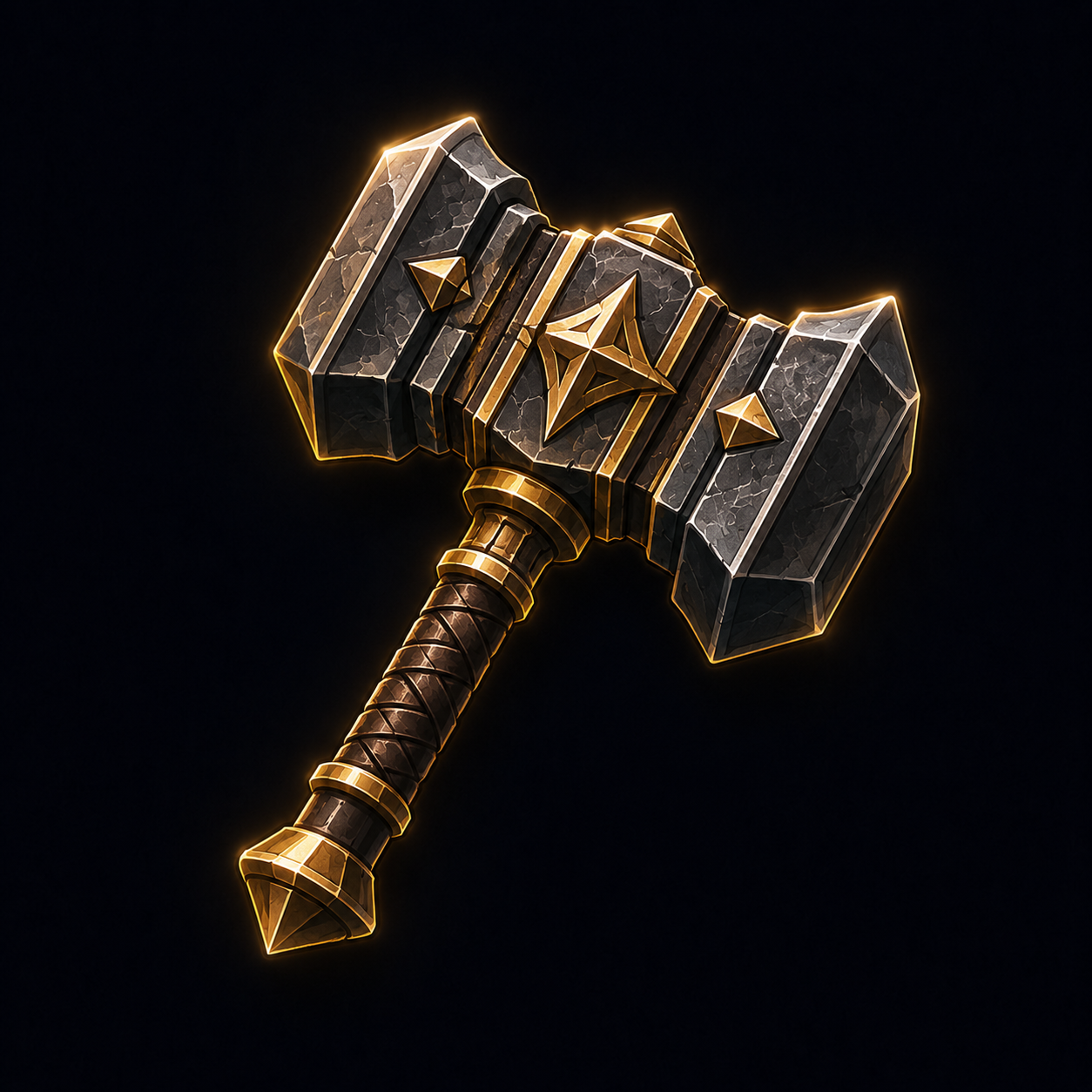 Heavy Weapons
Skill: Massive Weapons
Shield penalty: -6
 Bonus vs. Defensive Maneuvers: +3
 Penalty vs. Dodge: -5
| Weapon | Base |
Enchanting |
Crafting |
|---|---|---|---|
| Greatsword | 4 | 4× | 4 iron ore |
| Great Hammer | 5 | 3× | 4 iron ore |
| Greataxe | 5 | 4× | 2 wood + 3 iron ore |
| Two-Handed Flail | 7 | 4× | 4 iron ore + 1 mechanical part |
| Double-Bladed Sword | 6 | 4× | 5 iron ore |
| Double-Headed Mace | 7 | 3× | 5 iron ore |
| Saw | 6 | 3× | 3 iron ore + 1 mechanical part |
| Great Club | 4 | 3× | 4 wood + 1 iron ore |
| Scythe | 6 | 3× | 1 wood + 4 iron ore |
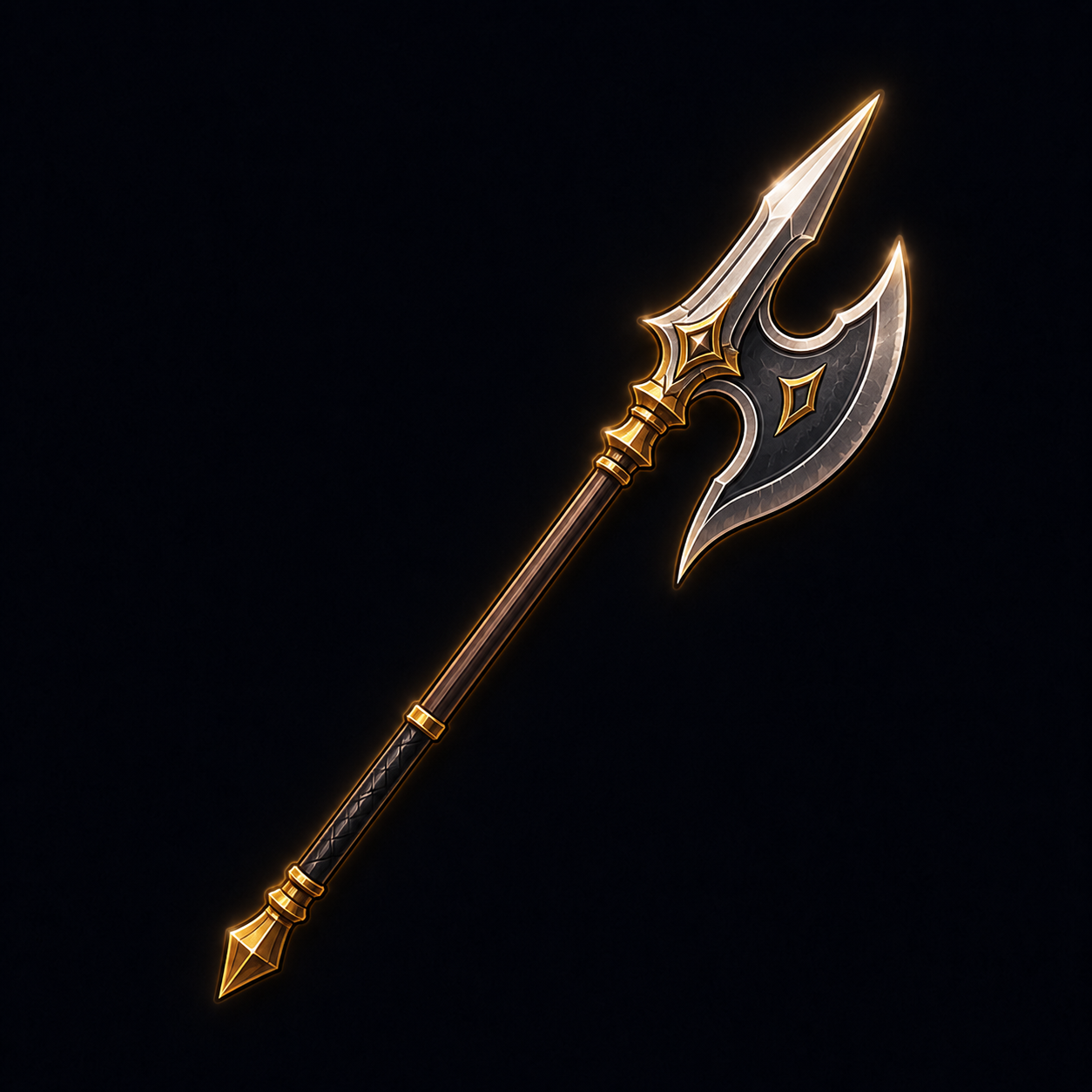 Polearms
Skill: Polearm Weapons
Shield penalty: -4
Bonus vs. Defensive Maneuvers: +2
Penalty vs. Dodge: -4
| Weapon | Base |
Enchanting |
Crafting |
|---|---|---|---|
| Halberd | 8 | 4× | 6 iron ore |
| Spear | 4 | 2× | 3 wood + 1 iron ore |
| Javelin | 3 | 1× | 3 wood |
| Spiked Pole | 7 | 3× | 5 iron ore |
| Staff | 1 | 3× | 3 wood |
| Double Spear | 6 | 3× | 2 wood + 3 iron ore |
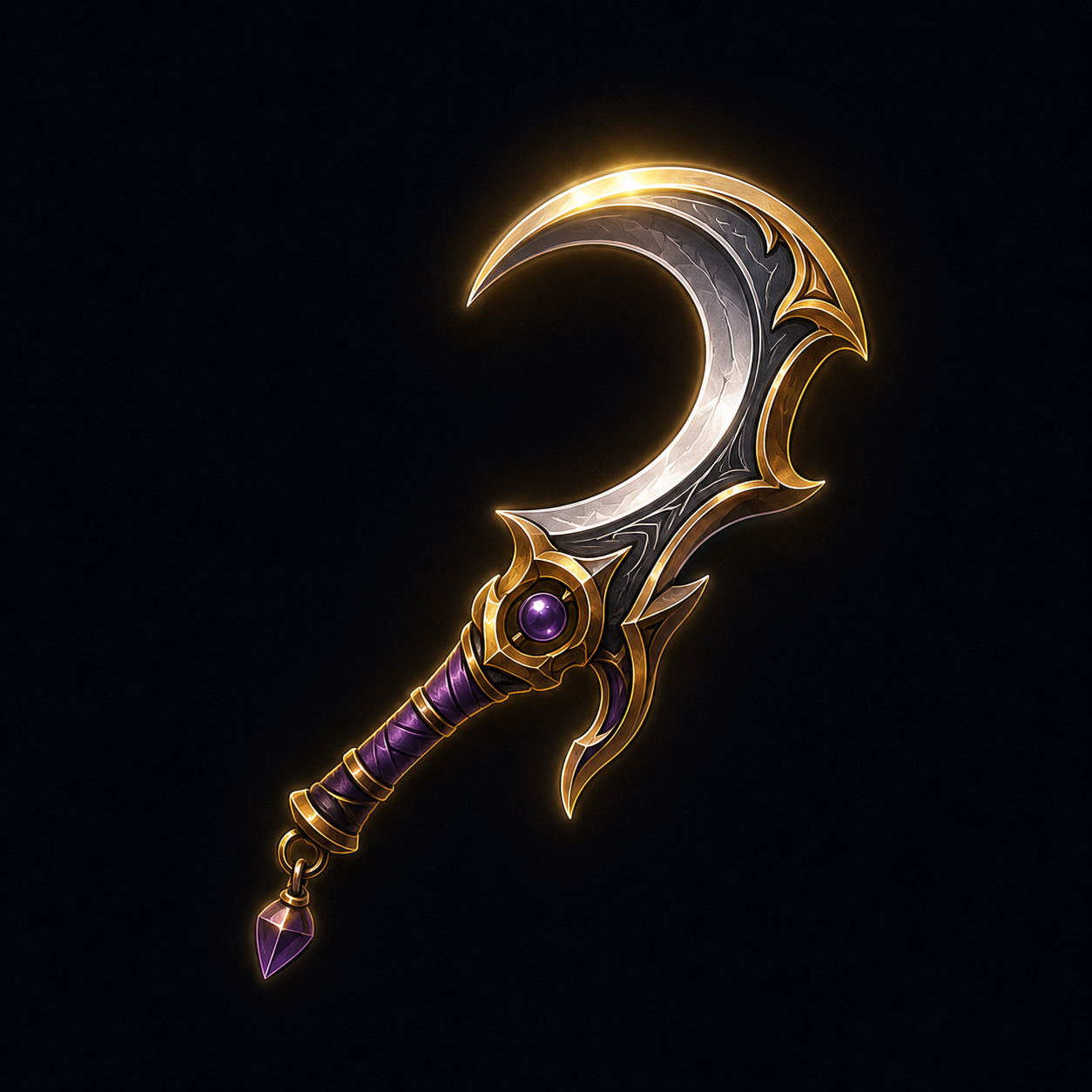 Exotic Weapons
Skill: Exotic Weapons
Shield penalty: -3
Penalty vs. Defensive Maneuvers: -1
Penalty vs. Dodge: -1
| Weapon | Base |
Enchanting |
Crafting |
|---|---|---|---|
| Katana | 5 | 3× | 4 iron ore |
| Sabre | 4 | 2× | 3 iron ore |
| Chain Scythe | 9 | 4× | 5 iron ore + 1 mechanical part |
| Rapier | 3 | 1× | 2 iron ore |
| Trident | 7 | 5× | 6 iron ore |
| Kukri | 3 | 1× | 2 iron ore |
| Whip | 2 | 1× | 2 cloth |
| Chakram | 4 | 2× | 3 iron ore |
 Ranged Weapons
Skill: Ranged Weapons
Shield penalty: -5
Penalty vs. Defensive Maneuvers: -3
Penalty vs. Dodge: -1
| Weapon | Base |
Enchanting |
Crafting |
|---|---|---|---|
| Sling | 2 | 1× | 2 cloth |
| Short Bow | 3 | 1× | 2 wood + 1 cloth |
| Light Crossbow | 4 | 3× | 2 wood + 1 cloth + 1 mechanical part |
| Long Bow | 6 | 3× | 4 wood + 2 cloth |
| Heavy Crossbow | 7 | 4× | 5 wood + 1 cloth + 1 mechanical part |
| Throwing Javelins | 3 | 0× | 12 pcs - 2 wood |
| Throwing Axes | 4 | 0× | 6 pcs - 1 iron ore |
| Throwing Daggers and Stars | 3 | 0× | 10 pcs - 1 iron ore |
🛡 Armor and Shields
Armor and shields wear down over time and reduce their defense rating. They can be repaired with one part of basic crafting. Wear occurs only at low Armor skill levels.
Shields
- Better shield: +1 to defense rolls.
- Masterwork shield: +2 to defense rolls + 1 defense rating.
- Upgrade: +1 defense rating per level.
| Type | +DM |
Dodge |
 DEX DEX |
 Min AC Min AC |
Crafting |
|---|---|---|---|---|---|
 Small Shield Small Shield |
+2 | -2 | -1 | 0 | 2 wood + 2 iron ore |
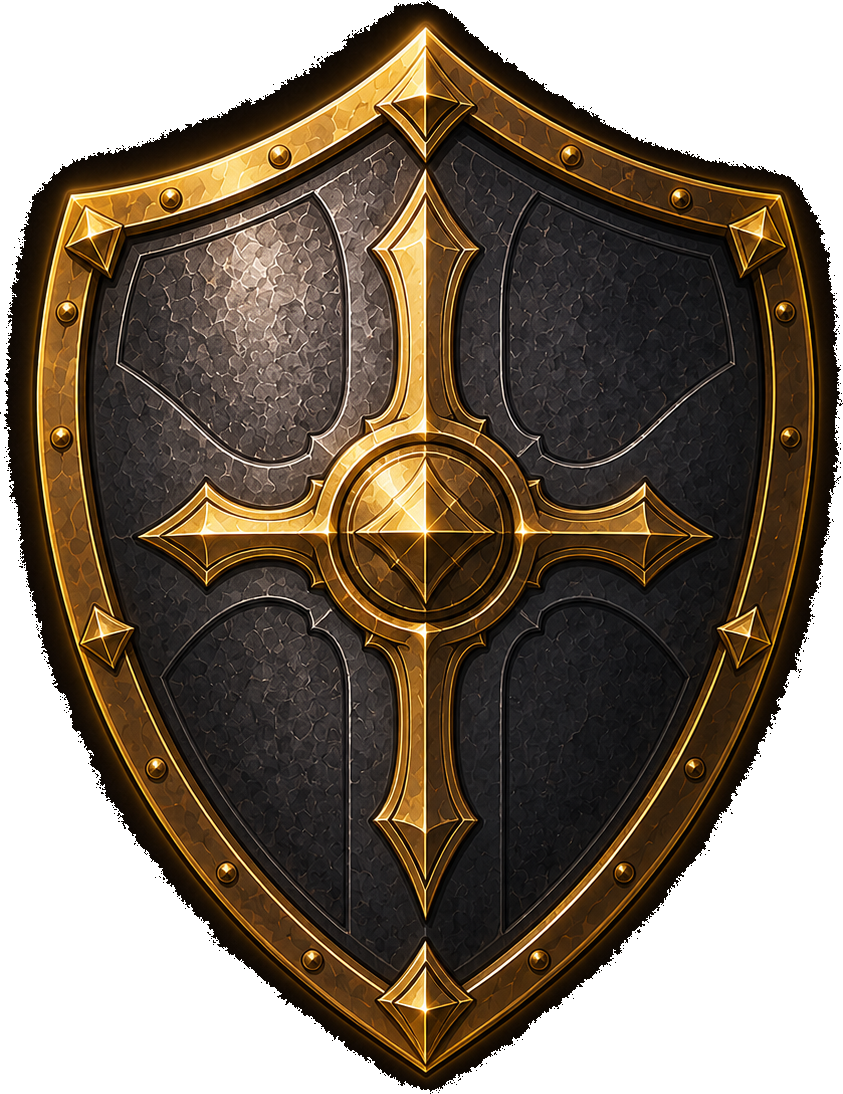 Large Shield Large Shield |
+4 | -4 | -2 | 1 | 2 wood + 4 iron ore |
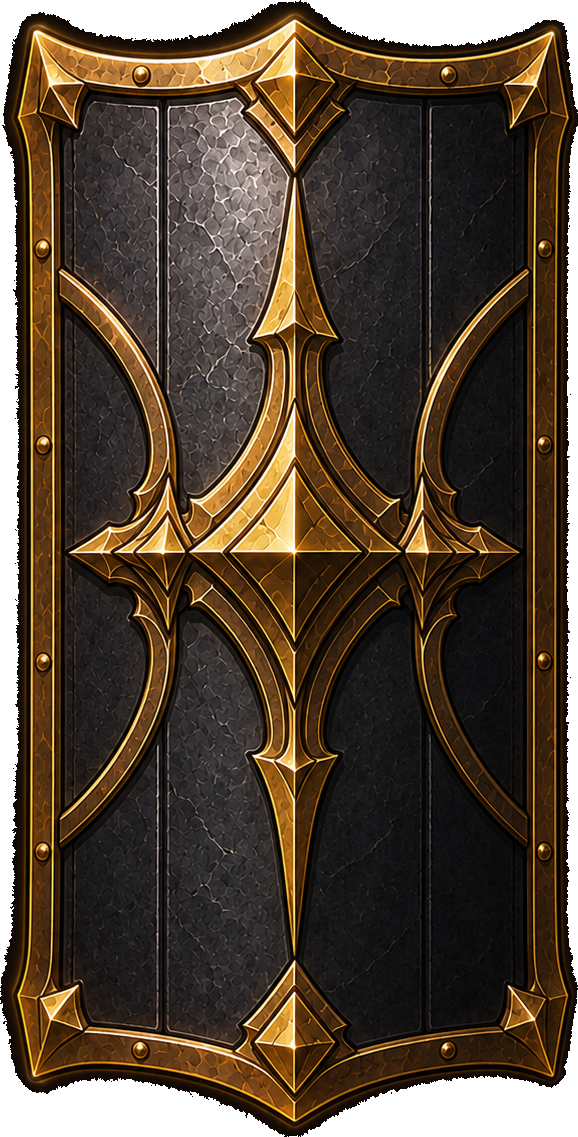 Pavise Pavise |
+6 | -6 | -3 | 2 | 2 wood + 6 iron ore |
 Armor
Armor
- Better armor: +1 roll to Dodge + 1 defense rating.
- Masterwork armor: +2 roll to Dodge + 1 Dexterity stat bonus + 2 defense rating.
- The base number of enchantments on armor is at least 3.
| Type | Dodge |
DEX |
Min AC |
 Upgrades Upgrades |
Crafting |
|---|---|---|---|---|---|
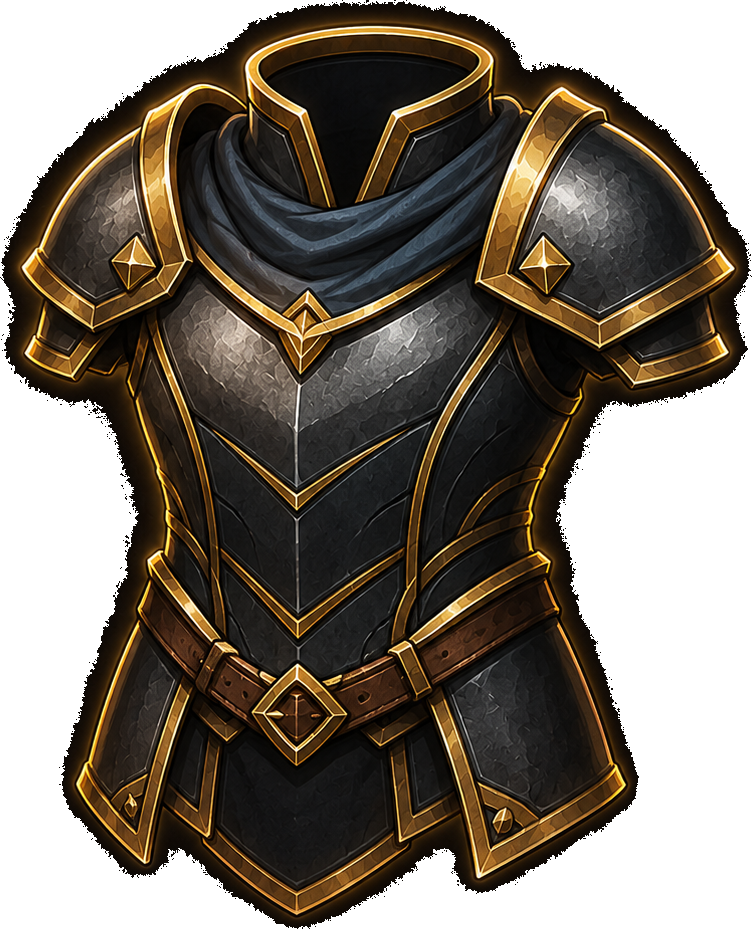 Light Armor Light Armor |
+1 | +0 | 0 | +1 defense rating and +1 Dodge/Dexterity bonus for every 2nd upgrade level | 6 cloth |
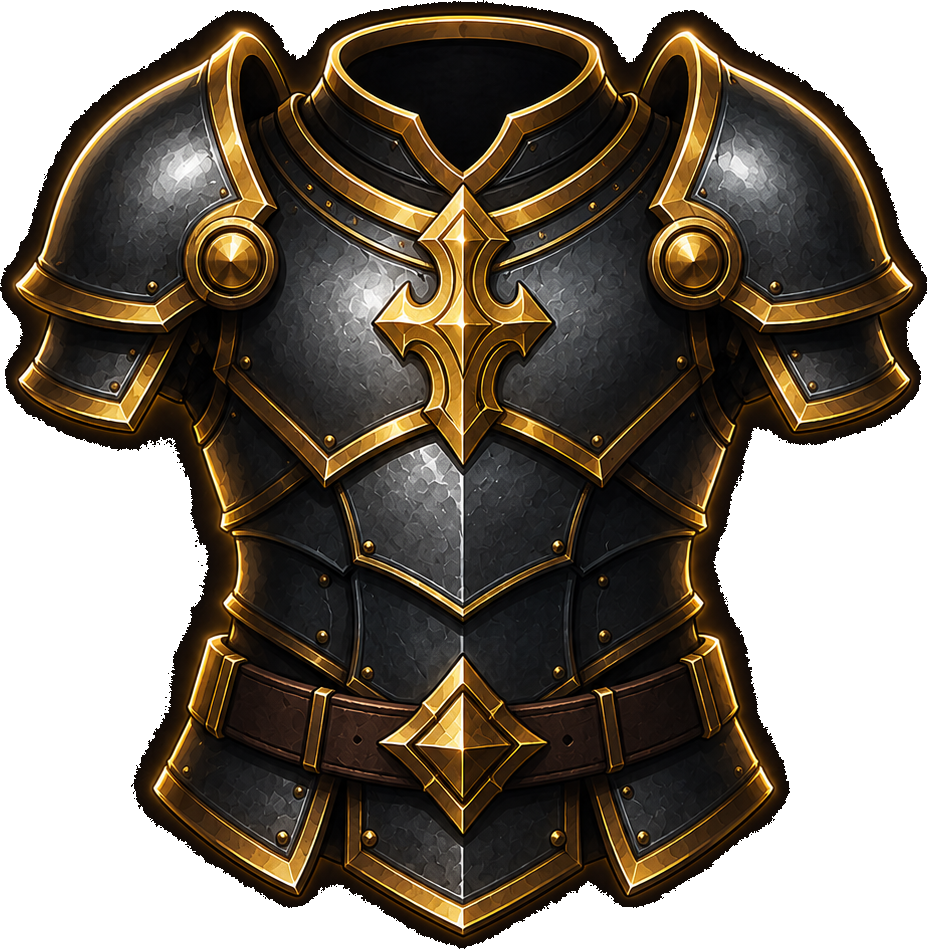 Medium Armor Medium Armor |
-1 | -2 | 1 + 1 (for Armor level 3) or 2 (for Armor level 5) | +1 defense rating per level | 2 iron ore + 2 mechanical parts |
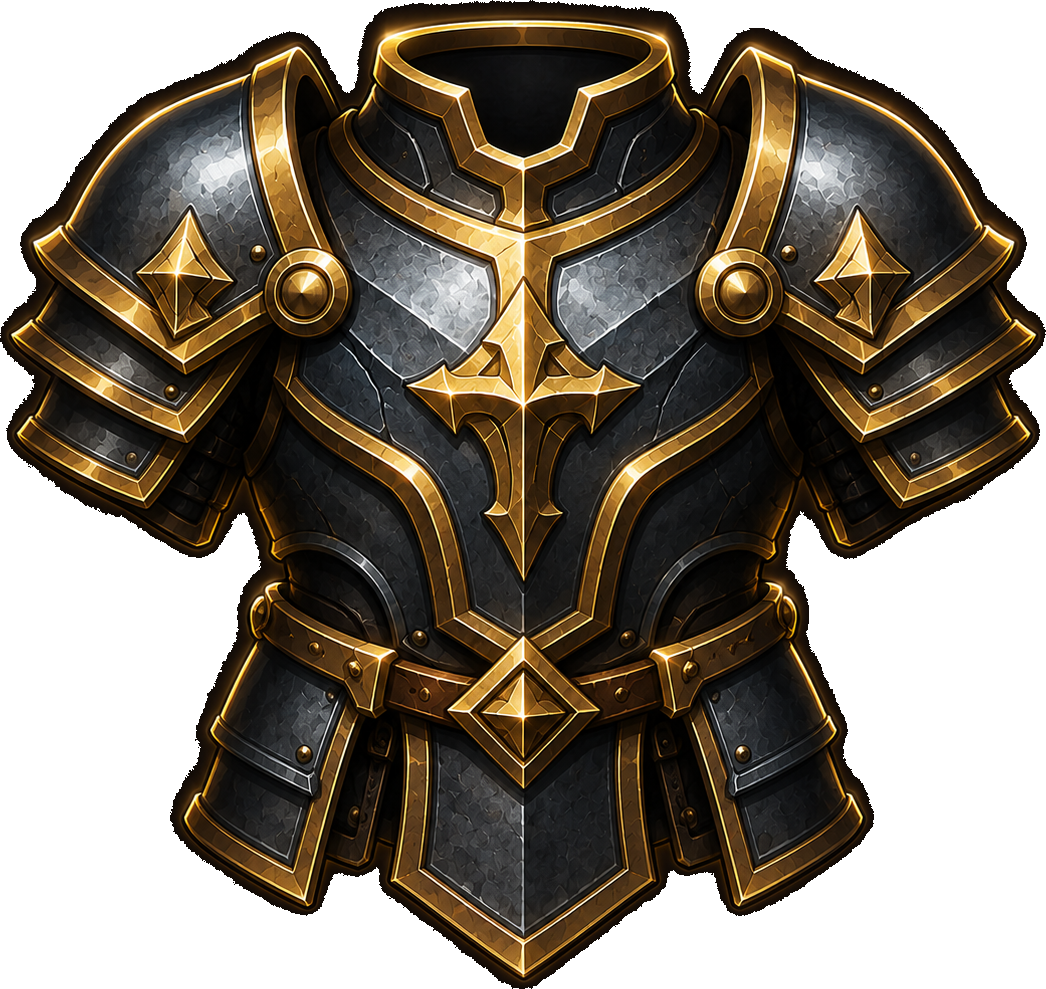 Heavy Armor Heavy Armor |
-5 | -4 | 3 + 1 (for Armor level 3) or 2 (for Armor level 5) | +2 defense rating per level | 6 iron ore + 2 mechanical parts |
🙏 Deities
Players can gain a deity at the start of the game or later through the story. Changing faith can mean losing old bonuses and gaining new ones.

Auris – Eye of Eternity
Auris is an ancient deity of time, order, and the unseen balance that holds the universe together even when everything else seems to be in motion. His faithful believe that no deed ever vanishes without a trace, because every choice leaves an imprint on the course of the world and returns in another form. Auris is said to see not only what is, but also what could have been and what is yet to come, which is why he is worshipped by those who seek wisdom, patience, and a steady direction in a world full of chaos.

Luna – Silver Lady of the Night
Luna is the goddess of shadows, secrets, illusions, and everything that hides beyond the edge of direct light. Her name is whispered in narrow alleys, quiet chambers, and over the graves of those who vanished too suddenly or too silently. Her followers believe that truth never lies only on the surface, and that night hides not only terror, but also freedom, shelter, and the chance to escape what daylight would never allow. Luna is generous to her faithful, but betrayal does not fade in her eyes, and she punishes it long and cruelly.

Ignis – Lord of Flames
Ignis is the deity of fire, war, passion, and destructive force that burns away not only bodies, but also weakness, fear, and doubt. In the western lands he is worshipped as the patron of warriors, conquerors, and all who believe that a person discovers their true self only through the trial of pain and battle. His followers do not see fire as a mere element, but as a purification that burns away everything unworthy and leaves only what is truly strong. Where Ignis walks, peace does not remain, but truth does, and that truth is often very hot.

Valtor – Smith of Fate
Valtor is the god of iron, craft, discipline, and order that does not change according to mortal wishes, but according to the firm laws of the world. Smiths, builders, commanders, and rulers turn to him for a steady hand, a clear mind, and endurance, because Valtor's faith is not built on sentiment, but on work, will, and precision. His church teaches that a good life must be forged like a blade: patiently, under pressure, in fire, and without weak points. Valtor gives no easy answers, but rewards those who endure.

Nythis – Serpent Whispering Mother
Nythis is the goddess of deception, magic, seduction, and the quiet hunger for power that grows where others fear even to think. Her adherents do not believe in brute strength or honorable confrontation, because according to their teaching true power does not lie in the sword, but in the tongue, in the thought, and in the ability to make others carry out what you want of their own accord. Her cults are often elegant, dangerous, and full of beauty that can turn to poison in a single moment. Whoever serves Nythis knows that the fate of others is best written in whispers.

Sekáč – Lord of Death
Sekáč is not a god of evil, but of inevitability, endings, and the judgment that waits for everyone without exception. He is the guardian of the boundary between life and death, the judge of souls, and a silent reminder that nothing living lasts forever. His faithful do not worship him out of love, but out of respect, because they know that death is not a punishment, but a law that keeps the world in balance. He hates the undead, because by his will they violate an order that is meant to be final, quiet, and irreversible.

The Seven Eternal – Guardians of the Ancient Order
The Seven Eternal are not a single deity, but a group of ancient entities, each embodying one of the fundamental forces of existence. Their faith rests on purity, balance, and the conviction that the world must be guided by a higher order that stands above individuals, kings, and entire empires. Their followers are often devoted, strict, and convinced that only through discipline and purity can the world be kept from falling into chaos. Whoever serves the Seven Eternal serves not only themselves, but the very structure of reality.

Morgrath – King of Shadows
Morgrath is the ruler of the damned, lord of punishment and the shadows in which souls bear the consequences of their own deeds. He does not rule from mercy, but from the implacable logic of guilt and punishment, and for that very reason he is worshipped by those who believe in the inevitability of retribution. He is one of the three Lords of the Underworld and represents the part of it where there is no redemption, only the truth of who a person truly was. His name brings no comfort, but respect, and often a fear that is well deserved.

Ithil – Lady of Twilight
Ithil rules those who are lost, regretful, seeking a second chance, or desperately trying to survive despite their past. She is one of the three Lords of the Underworld and embodies the quiet twilight between condemnation and hope, between a fall and the possibility of return. Her followers do not ask her for power, but for understanding, a road back, and the chance to speak final words where otherwise only silence would remain. Her cult is often melancholy, but not hopeless.

Vhorax – Judge of the Last Judgment
Vhorax is the one who receives the souls of fallen heroes, martyrs, and all who dedicated their lives to others. He is one of the three Lords of the Underworld, and his hall is not a place of punishment, but of final judgment over those who bore the burden of honor, sacrifice, and responsibility. His faith teaches that a person's true greatness is not known by words, but by what they were willing to sacrifice when it mattered most. Vhorax is stern, but not unjust, and that is why he is both feared and honored.

Gharmoth – The Hungry Prince
Gharmoth was a stranger from another continent who founded a cult in Ulvenor and became a god of insatiable strength, blood, ferocity, and a will that ignores laws, mercy, and consequences. He is the patron of those who believe that the world belongs to the strong, and that the only truth is the ability to take what they want and hold it against everyone else. His cult is violent, passionate, and full of worship for personal supremacy, because Gharmoth does not reward humility, but hunger. Whoever serves him learns that blood is not only a price, but also nourishment.

Sylvara – Mother of the Wilds
Sylvara is the ancient ruler of the elves and goddess of nature, life, the wilds, and the natural order. During her reign she became a protector of animals, a healer of wounds, and a quiet but implacable force that punishes those who disturb the balance of the world out of greed or pride. Her faithful see her not only as a gentle mother, but also as a huntress who can be fierce when it is time to protect what is older than humankind itself. Where civilization sees chaos, Sylvara sees life in its purest form.